Wednesday, August 23, 2017

Instant Settlement: Town

http://brandongobey.deviantart.com/art/Fantasy-town-entrance-exit-426759975
These places just spring up out of nowhere
Continuing this bi-weekly series on making settlements from scratch, let's move on to towns. Again, I want to point you to this fantastic article that was my inspiration for this series.

Towns, of course, are larger than villages. However, that comes with some baggage - a town is never placed randomly. There can be a lot of them, but they all serve a purpose. And that purpose is trade.

Trade is the lifeblood of any society, and people gather where the money goes. That means towns are built in strategic or advantageous locations, such as on a waterfront or at a trade intersection. Much like a village, a portion of the town's population is located in the surrounding area. However, this usually amounts to 30-50% of the population, and the population expands to a maximum of about 6,000 people.

Towns are self-sustaining, more diverse than villages, and have various trade functions. However, unlike cities and villages, there is less variety among towns. A city is such a large structure that it is completely unique. A village is tailor-made to a small group of people. Towns, on the other hand, all look a lot alike.

You need shops. You need government, representing the interests of the citizens and the rulers of the country. You need defenses, places of worship, and places to learn trades. And occasionally, you can get a unique locale or shop that can't be found anywhere else. All this means that a large majority of towns are going to feel similar, even if they look and function a bit differently everywhere you go.

With all that in mind, let's do this!

Instant Settlement: Town


Roll the following dice:
2d4
2d6
2d8
1d10

To recap from last time, each die represents a feature of the town. Don't worry about keeping the dice in a tight formation. Space between dice can be taken up by residencies. However, you will want to note the centermost feature and the outermost feature. These will determine the nature of the town square, and the nature of the area immediately around the town.

Start with the d4s and work your way upwards. If any number is repeated, replace the number on the higher die with the lowest available number. So if you roll a 3 on the d6 AND the d10 (and 1 is already on the d4) the d10 would become a 2. The highest die becomes the highest number, so if you roll a 1 on the d4, d6, and d10, they would become 1, 2, and 3 respectively.

A few notes on town structure: NPCs are about 75% Commoners, the remainder have occupations (such as guard or acolyte) that give them better stats. Anywhere from 50-75% of the town's population lives in the surrounding farmland and uses the town only for its features. And any citizen that doesn't already have a role will be involved in commerce, trade, or production of goods.

Here's our example roll.
The image isn't as clear this time, but here's the numbers listed:
And here's the adjusted numbers, with the inner- and outermost die circled.

Die Results
1. Location
2. Mayor
3. Town Council
4. Barracks
5. Temple
6. Guild
7. Defenses
8. Transportation
9. Unique Shops
10. Oddities

1. Location

Nearly every town is built on the foundation of trade. A town is usually at the intersection of major trade routes, or near a source of natural resources such as a mine. A vital location creates the basis for wealth in a town, and increases the population by 3,000.

If a town doesn't have a specific location, it is still located along a major trade route. Pick another feature of the town, which becomes the basis for the town's formation. For example, a town might form because a temple was built on a great holy site.

The type of die determines the location of the town.
  • 1d4 - The town is located on a major body of water, like a lake, river, or ocean. Ship trade is common.
  • 1d6 - The town is located at the intersection of two major trade routes. Traveling merchants are everywhere.
  • 1d8 - The town is built around a natural resource, such as a mine, forest, or particularly fertile soil. Nearly everyone in town works in the local industry (i.e. miners, woodcutters, farmers)
  • 1d10 - The town is built on a strategic border location due to inter-country conflicts. Nearly everyone in town is ready to go to war at a moment's notice.
Additionally, note the position of the die:
  • If the die is the centermost die, the feature cuts directly through the center of the town, forming the town square.
  • If the die is the outermost die, the feature is not visible from the town, but is a short distance away. Road signs point to the town.
  • If the die is anywhere else, the feature is easily visible just outside town.

2. Mayor

Every town has a mayor, appointed by the noble that rules the country. This is by necessity - the town represents a significant commercial interest for the country, and the ruling noble needs a voice within the city walls. Because the mayor is granted to a town externally, the presence of a Mayor has no effect on the town's population.

If a mayor is absent, then the town's mayor was recently deposed for being a despicable tyrant. The ruling noble is attempting to find a replacement as quickly as possible.

The type of die determines the mayor's governing style:
  • 1d4 - The mayor is friendly and wise, and respects the decisions of the Town Council. The government closely resembles a Democracy. Use Noble stats (MM pg. 348).
  • 1d6 - The mayor is cunning and opinionated, and often at odds with the Town Council. The government is teetering between Democracy and Autocracy. Use Noble stats (MM pg. 348).
  • 1d8 - The mayor is a prominent member of the town's guild or temple. The government borders on Kleptocracy or Theocracy, which may cause some tension among the populous. Use Priest stats (MM pg. 348) or Spy stats (MM pg. 349).
  • 1d10 - The mayor has hamstringed the Town Council and acts as a Dictator. They are likely to be deposed soon. Use Bandit Captain stats (MM pg. 344).
Additionally, note the position of the die:
  • If the die is the centermost die, the mayor has a prominent home that overlooks the town square. The ground floor of his home acts as a meeting space and common area for citizens that the mayor is favorable towards.
  • If the die is the outermost die, the mayor lives in an estate outside of town. The estate has its own guards and defenses, and the city council building has an office for the mayor to conduct business from.
  • If the die is anywhere else, the mayor has a finely built but not-too-prominent home that sits among the other residencies. The mayor does business here.


3. Town Council

Nearly every town has a town council. They are generally elected, and represent the interests of the middle class. Because the middle class drives the trade and commerce in a town, the presence of a town council increases the town's population by 500. The city council is staffed by commoners, though more prominent members can use the Noble stat block (MM. pg. 348).

If a town council is absent, then the town has a system for gathering and tallying the votes of the entire populous, which happens about once a month. If the mayor would have a relationship with the town council (from feature #2) they instead have that relationship with the entire town. Also, the townsfolk are quite politically informed.

The type of die determines how the council was formed:
  • 1d4 - The council consists of elected officials, selected from the most prominent and well-informed citizens. Many of them are merchants.
  • 1d6 - The council consists of individuals representing major families or trade guilds. They are older folks who have lived in the town a long time.
  • 1d8 - The council consists of prominent members of the local temple or guild. They prioritize funds to support their organization.
  • 1d10 - The council consists of citizens who were elected, but have since sold out to the mayor, the temple, or the guild. The citizenry isn't pleased about it.
Additionally, note the position of the die:
  • If the die is the centermost die, the council has a large common house where they hold meetings, which overlooks the town square. A part of the building acts as a common space for all citizenry.
  • If the die is the outermost die, the council has a small amphitheater space near the edge of town, where their meetings are held in a weekly public forum. Topics of discussion are posted on the outside of the building and attendance varies based on what is being discussed.
  • If the die is anywhere else, the council meets in the home of their wealthiest member, which has a large room built to accommodate the council and a small audience.

4. Barracks

A town has a lot of wealth flowing in and out of it. And that wealth needs protection! The promise of a standing military force to safeguard product also attracts merchants to towns. The presence of a barracks increases the town's population by 500.

If the town lacks a barracks, then the largest families/guilds/temples in the town provide a small body of private guards. This could give them considerable leverage over the town.

The type of die determines the strength of the soldiers:
  • 1d4 - A standard issue militia. About 150 Guards (MM pg. 347) lead by a group of 10-15 Knights (MM pg.347) trained and appointed by the mayor. The group is disciplined around the mayor and his knights, but prone to falling asleep on the job if their task is boring.
  • 1d6 - Mercenary Militia. About 100 Thugs (MM pg. 350) lead by a group of 5 Bandit Captains (MM pg. 344). The locals disapprove, but as long as the town council pays the Bandit Captains, the mercenaries behave themselves.
  • 1d8 - Tenuous peace. 50% of the town's population use the Bandit stat block (MM pg. 343), and gangs control the streets of the town, with or without the mayor and town council's approval. If the leaders of the town disapprove, a small contingent of personal bodyguards protect important members from harm.
  • 1d10 - A Mage guard. 30-50 Mages (MM pg. 347) protect the town with spells and wards. They use a Magical Guild or Archmage's Tower within the town as their base of operations.
Additionally, note the position of the die.
  • If the die is the centermost die, the barracks is a prominent feature in the center of town, and the soldiers occasionally use the town square for training exercises.
  • If the die is the outermost die, the soldiers are situated on the edge of town, and use the nearby open land to train.
  • If the die is anywhere else, the barracks is positioned among the town's residencies, however, the soldiers still travel outside the town to do their training exercises.
http://skaya3000.deviantart.com/art/Quiet-Elven-Town-515266749
Making my way down town...

5. Temple

Nearly every town has a temple, to allow worship of whichever Gods are accepted or fashionable at the time. This varies based on the disposition of the nobility, but generally, gods of justice, peace, agriculture, and honor are socially accepted enough to merit worship. A temple also serves as a place of healing and ceremony, bringing the town's population up by 500.

If the town lacks a temple, then several small shrines perform the duties of the faithful, however, no one god's worship is prominent enough among the townsfolk to merit a major structure.

The type of die determines the scope of the temple:
  • 1d6 - The temple serves only the patron God of the noble who appointed the mayor. Many townsfolk attend services here, even if they are not direct followers of that God. The several pastors use priest stats (MM pg. 348) and do their best to make the services accessible to all.
  • 1d8 - The temple serves 3-4 deities whose worship is accepted by the noble who appointed the mayor. Each God is served by a Pastor (Priest, MM pg. 348) and their followers (Acolytes, MM pg. 342). Between them, nearly all citizens can find a place at the temple.
  • 1d10 - The temple serves a minor God whose worship isn't outlawed, but who is locally prominent. The temple may or may not have the support of the Mayor, but it certainly has the blessing of the town council. There is only one Pastor (Priest, MM pg. 348), but 25% of the town's population use the Acolyte stat block (MM pg. 342).
Additionally, note the position of the die.
  • If the die is the centermost die, the temple has a large yard that forms the town square. During the summer, wedding ceremonies are held in this space.
  • If the die is the outermost die, the temple stands on a hill overlooking the town. It could be inside or outside the town's defenses.
  • If the die is anywhere else, the temple is positioned among the town's residencies, and despite being the tallest building in town, doesn't take up too much land.

6. Guild

All towns have guilds, supporting and training craftsmen, merchants, soldiers, and more. However, not every town has a major guild, which is what this feature represents. The presence of a major guild means that nearly every professional in town who is eligible for membership will join the guild. Since these people would be in a guild whether or not a major guild is present, the guild does not affect the town's population.

If a major guild is not present, then, of course, many smaller guilds fill the void. Also, guild membership becomes more of an option among the citizenry, acting less like a society and more like a school for a particular skill.

The type of die determines the scope of the guild:
  • 1d6 - The guild supports the most prominent profession in the town. It is highly specialized, and masters of the profession might visit the town to teach or trade.
  • 1d8 - The guild is broad in scope, covering not only professional skills but multiple trades and basic educational instruction.
  • 1d10 - The guild is built on the reputation of a single great master of the profession, who may or may not be still alive. If they are alive, people travel long distances to study with them.
Additionally, note the position of the die.
  • If the die is the innermost die, the guild has a prominent position overlooking the town square, and the square is used for ceremonies, open markets, and guild meetings.
  • If the die is the outermost die, the guild stands on the edge of town, and uses the open spaces around it to perform guild events and as building space.
  • If the die is anywhere else, the guild is positioned among the town's residencies, and retains its use as a public meeting space, but without a major outdoor area.

7. Defenses

Sometimes, a militia isn't enough. The presence of some kind of physical defense system is a boon to a town, and provides a sense of security to its inhabitants. Town defenses boost the town's population by 1000.

If defenses aren't present, then the town's militia makes regular patrols around the outskirts of town.

The type of die determines the type of defenses:
  • 1d8 - Constructed: the town is surrounded by walls, a moat, or some sort of magical ward. These may or may not take advantage of natural defenses as well.
  • 1d10 - Natural: the town may be located alongside cliffs, a river, or at the top of a hill. Though imperfect, these defenses provide a strategic defense if the town was to be attacked.
Additionally, note the position of the die.
  • If the die is the innermost die, a guard tower stands in the town square, tall enough to see the edges of the town and sound an alarm if needed.
  • If the die is the outermost die, several small guard towers are lined up along the perimeter of the town, each staffed by a small number of guards and each able to provide an alarm.
  • If the die is anywhere else, no towers exist, but the defenses are regularly patrolled by the city militia.

8. Transportation Services

These constitute services beyond the usual shipping routes: they either offer travellers a unique experience, or offer to ship goods in a unique way. Because transportation adds to the usability of a town by wanderers and merchants, the presence of a transportation system increases the town's population by 500.

If a town does not have specialized transportation services,

The type of die determines the type of transportation services:
  • 1d8 - For goods. Instead of ships or caravans, the town offers a unique method of moving products, such as mine carts, huge pack animals, or teleportation circles. These services are used by the most prominent merchants in the town, and afford high levels of protection.
  • 1d10 - For travellers. Same as above, but on a smaller scale. These services are used by the most prominent citizens in the town, and afford high levels of protection.
Additionally, note the position of the die.
  • If the die is the innermost die, the services are run by a prominent merchant located near the town square. The town is famous for those services.
  • If the die is the outermost die, the services link only to one other town. The road, not the town, is famous for utilizing that service (for example, the Road of Elephants, or a road where the rich simply teleport instead of walking along it).
  • If the die is anywhere else, then the services are provided to only a limited number of people, either due to availability or cost.

9. Unique Shops

The town contains a shop that is totally unique - you won't find this type of store again, outside of the big city. It could be a well-kept secret, or it could be famous, depending on the world and the town.

To determine the type of shop, take the original numbers from the 2d6's and add them together. I use this table to determine the price of magic items, as I've said in the past.
  • 2 - Magic Weapon shop: sells items that are Rare and Uncommon
  • 3 - Magic Armor shop: sells items that are Rare and Uncommon
  • 4 - Magic Wand, Rod, and Staff shop: sells items that are Rare and Uncommon
  • 5 - Magic Rings shop: sells items that are Rare and Uncommon
  • 6 - Magic Potion shop: sells items that are Rare and Uncommon
  • 7 - Magic Scroll shop: sells scrolls up to 3rd level, most spells available
  • 8 - Miniature Warfare: experimental weapon-maker is interested in building anything you can design. Personal ballistas? Oversized swords? Just give him a few days and it's yours... at full price of course.
  • 9 - Curse Purge Plus: fixes cursed items, adds curses to regular items, all for only 1000 gp a pop. Great for pranking your friends!
  • 10 - The Magical Menagerie: Sells monsters, mostly tame. Price is 1,000 gp times the monster's CR.
  • 11 - Pacts-R-Us: make your next level a Warlock level. Pact availability based on who runs the shop. No cost - just your eternal loyalty is fine.
  • 12 - Bulk Superstore: cheap prices due to eldritch deals magic. sells one Legendary magic item, chosen by the DM, and a wide variety of Rare and Uncommon magic items.
Additionally, note the position of the d10.
  • If the die is the innermost die, the shop is known by the townsfolk as a friendly and respectable, if a bit odd, place. It sits, alongside many other shops, around the town square.
  • If the die is the outermost die, the shop sits on the edge of town. The owner doesn't get out often and everyone seems a bit suspicious of them.
  • If the die is anywhere else, the shop is a small, unassuming shack. It appears much bigger on the inside than on the outside.

10. Oddities

Sometimes, a town is a bit on the strange side. This is fairly common in my homebrewed world of Ahneria, but if you are running a more mundane town, feel free to substitute this table for another. I adapted this one from the "Weird Locales"  table on DMG pg 109.

To determine the source of the weirdness, add the original numbers of the 2d8's together.
  • 2 - Town built on a floating mass of land
  • 3 - Wishing Well in the center of town
  • 4 - Crystal Cave that magically answers questions
  • 5 - Wrecked Ship (if near water, it's an air/space ship. Otherwise, it's a boat)
  • 6 - Wild Magic Zone
  • 7 - Ancient Tree containing a trapped spirit
  • 8 - Dead Magic zone (similar to Antimagic Field)
  • 9 - Built on a haunted hill or barrow mound
  • 10 - Permanent Portal to another plane of existence (either a one-way portal or a non-hostile plane)
  • 11 - Fog occasionally forms humanoid forms, like ghosts
  • 12 - Boulder craved with talking faces
  • 13 - Giant Crystal shard protruding from the ground
  • 14 - Nearby body of water has a river ferry guided by a skeletal captain
  • 15 - Nearby forest entirely made of awakened trees
  • 16 - Town built within the ruins of an ancient and massive graveyard
Additionally, note the position of the d10.
  • If the die is the innermost die, the feature only exists at very specific times, such as the night of the blue moon, or after a sacrifice to the Dark Gods has been made. If this feature involves the entire town's location (such as if the town is built on a floating mass of land) then the entire town only exists at that specific time.
  • If the die is the outermost die, the feature only exists on the ethereal plane. Creatures who can see or travel into the ethereal plane are surprised to find this relatively normal town is quite different from the other side.
  • If the die is anywhere else, the feature is present in the material plane at all times. Depending on the feature, a town might try to hide the fact that it exists.

Now, let's go back to our example roll. I've added some more stuff to the image, which should help me describe this town better.

The town overlooks a body of water, though to get to the water, townsfolk travel down a cliffside path. Ships dock at the bottom of the cliffs, and goods are carried up and down the path by animals and carts. The mayor is cunning and opinionated, often at odds with the town council. The council consists of elected officials, selected from the most prominent and well-informed citizens. Many of them are merchants, and together they push back against the mayor's kleptocratic tendencies. The town uses a mercenary militia, which the townsfolk aren't fond of, but the council knows as long as trade is good, the thugs won't misbehave. Additionally, the council supports the temple at the center of town, which is a place of gathering, worship, and ceremony, and forms the town square. The God of the temple is a locally popular God that doesn't have the mayor's approval, even though their worship is not illegal. A prominent citizen acts as the local pastor, and many of the townsfolk are trained healers in the way of the God. A major guild oversees the basic professional and educational training of the town, and nearly everyone either studied there and considers themselves a member. The town is surrounded by a protective wall, which incorporates the cliff face into its defenses. The town's population is around 5,500 people, many of which live in the area surrounding the walls..

In the picture above, the white lines represent major streets which divide the blocks of the town. The brown lines are roads leading out of the town. Each block contains 50-75 buildings, including shops, residencies, and of course the feature which the dice within that block represents. The innermost die (the 5 on the d10) represents the town square.

Once again, it's easy to see some plot hooks forming. The town seems quite loyal to this local God, and the mayor is opposed to the council. It makes sense that the mayor would be trying to sabotage the temple, but how? And for what ultimate purpose? Also, we have a town of healers (probably the pastor's doing) protected by mercenaries (possibly the mayor's doing). Are there conflicts? Does the church try to reform the mercenaries? Will the mercs turn on the council at the mayor's word?

There's a lot we could do here. My recommendation is that you make the town before the players find out about it, so you can set up rumors and build your map based on the town's location.

In two weeks, we'll be back to figure out how the heck we're doing entire cities!

http://brandongobey.deviantart.com/art/Medieval-village-369684992
Home is where you hang your sword, so they say

Thanks for reading!

Monday, August 21, 2017

Monday Recap: Framed

Another month, another session of Maze of the Blue Medusa. I had to come up with a bunch of cool loot to give my players, and they actually found some of it.Which can only mean I must make more loot. The cycle continues!

Also, at this point we're actually starting to get into some spoilers for Maze of the Blue Medusa. If you plan to play this campaign, you may wish to turn back now!

Edit: This series was written before allegations about the authors of this module were released. To respect the players of the game, as well as the brilliant writing of Patrick Stuart, I've decided to keep these posts up. However, all links and art have been removed. Thank you for understanding.

This story is part 6 of a series. The campaign was completed.
| Part 1 | Part 2 | Part 3 | Part 4 | Part 5 | Part 6 | Part 7 | Part 8 | Part 9 | Part 10 | Part 11 | Part 12 |

Maze of the Blue Medusa: Framed


Cast of Characters
Jon: Dungeon Master
Megan: Aniria Lightningblood, Firbolg Tempest Cleric, accidentally destroyed her home, now an adventurer, rushes in to things
Makayla: Coria Kelvardil, Moon Druid Elf, traveling the world and cataloguing all the animals she can find, cartographer
Jackie: Derrik Evanwood, Human Bardbarian, punch things, woo women, deal with alcoholism, collect magic swords
Tom: Alan Xanthudides, Human Phoenyx Sorcerer, not-so-secretly a noble with a bad family, trying his best not to burn the place down, actually quite good at social graces
Liz: Guest NPC Gibba Gognata, caterpillar/snake child of the medusa, loves eating stone and people who let him eat stone

When we last left the party, they had been wandering through the art gallery housed in the maze. They explored several rooms before stumbling into the room that once held the Lion in Lapis Lazuli, a rude beast which they had dispatched earlier.

As they explored the surrounding rooms, Aniria heard the sound of chewing behind them. Sure enough, it was their friend Gibba Gognata, sneaking around and eating the walls. Gibba technically wasn't supposed to be doing so, by his mother's rules, but the adventurers didn't mind.

They explored several rooms, including one that made them irrationally angry and one that made them irrationally afraid, both based on artworks by the same person, one Milo de Fretwell. Coria and Aniria didn't approve of his overtly-emotional artwork.

The group held hands and crossed the fear-colored room, lead by Coria, who was able to suppress the effects of the artwork on herself. They emerged in a room with a large metal tree holding up glass globes. One of them had fallen and shattered, apparently killing the cannibal who had been standing below it. Alan wanted to grab a sphere for later, but the group persuaded him not to.

From here, they explored several smaller galleries. They found a portrait of a beautiful woman, who they quickly realized was Charity Torn, one of the three God-sisters of the Church of the Triad.

The characters were surprised to find that the painting could talk, but only had knowledge from the point in Charity's life when the portrait was created. They asked her some questions about the empire she once ruled, but unfortunately, she couldn't help them much in the maze.

As the group was preparing to leave, they were suddenly attacked by more of the bird-masked men, who demanded they give over their valuables. The group attacked, but it quickly became clear that Charity's painting held some of her powers: they struggled to do any harm to the bird-men, and vice versa!

After a few rounds of flailing about uselessly, Aniria decided to put a Fog Cloud up over the painting. Charity, who had rarely ever seen anyone being harmed before, was saddened to miss the chance to see violence, but the group made quick work of several bird-men before they scampered off.

Exploring the other rooms in the gallery, they saw some mosaics and curtains. Apparently, everything here was a strange and unusual work of art, and many of them dangerous, as passing through the curtains caused flames to lick at Aniria's heels. The group found another work by Milo de Fretwell, this one a gemstone mask attached to a skeleton. They decided to leave it alone.

Finally, they came to a dead end. A large aquarium full of lazy fish was the last room in the gallery. However, the sight of the fish caused strange things to happen to Derrik, Aniria, and Gibba. Derrik began to believe he was a polar bear, and leapt in the aquarium to eat a fish. Aniria jumped in too, but only to immediately grab a fish and try to strangle it. Meanwhile, Gibba suddenly felt the need to give his opinion on everything.

At that moment, a few cannibals burst into the room, demanding that the artwork wasn't to be interfered with. With two of their party members underwater, Alan decided to simply immolate their guests with a well-placed Fireball. Afterwards, he combined his Burning Hands spell with Coria's tail swipe to break the glass of the aquarium and free their friends.

The party retraced their footsteps back to the room that once contained the Lion in Lapis Lazuli, taking a short rest in a small red-colored room that seemed to repel the dangers of the gallery. They then pressed through the anger-colored room to explore the next section of the gallery.

They saw an empty room, a fish-like geode floating through an area, and a wispy sculpture that spoke strange whispers which only Derrik could understand. They passed by a corpse with some wax on it, followed by a line of statues with lanterns instead of faces. This made Coria a bit worried.

The group found a foot-long jade locust, which Derrik realized was incredibly valuable. He quietly stuffed it in his bag.

The group explored a large room full of pillars and a huge sculpture of a pair of hands, connected at the wrist. The hands took Derrik's bag, removed the jade locust, and put it back on its pedestal, waving an admonishing finger. However, as soon as the group left the room, Derrik grabbed the statue again.

They wandered into a large, long room that held a wire cage. The cage was as large as a house and oddly shaped like one. Inside, an emaciated and naked man watched them with hopeful eyes.

He told them his name was Ralph, and that he had been an amateur artist trapped here by the Lich Xanthoceras for being a romantic rival of the God-sister Zamia Torn. The cage was cursed, it would have to be destroyed before he could escape.

Aniria, finally in a room large enough for her Call Lightning spell, cast it and began blasting the cage with bolts of electricity. At the sound, the large hand sculpture burst into the room. Ralph told the characters it was the curator of the artwork, and would certainly kill them for breaking the artwork. Behind the hands stood the eight statues with lamps instead of faces, apparently waiting for the group to be in a vulnerable spot.

The hands leapt forward, bludgeoning Coria until her allosaurus form fell. Alan and Derrik rushed forward to help, while Aniria stayed back to blast the hands with lightning. Coria re-formed into her dino shape, and together the group made quick work of the statue. Gibba, excited to eat stone, began to munch away.

Meanwhile, the lamp-faced statues attacked, trying to grapple the characters into an embrace that would bring their lamp-faces right up to the adventurer's. One by one, the stone men fell, and one by one Gibba gobbled up their pieces. By the time they were done, the group was tired, but victorious. Aniria finished blasting the cage and Ralph was freed.

Gibba slithered around Ralph, delighting in creeping him out. Anrira lent him a fur coat so he wouldn't be naked, and he told them he knew his way around the gallery a bit.

Ralph lead them through a room with an odd sculpture and a room with large spheres in it, warning them of the danger in both rooms. They found a room with a perch in it, which turned out to be the home of the bejeweled hummingbird they had met several times on their journey. Gibba thought it looked delicious.

The group found (and killed) a weird Rat-leopard hybrid while Gibba used a bone to lure the hummingbird down. With a decisive snap, Gibba ate the bird! Thus ended the life of a small creature that had plagued the adventurers since the beginning. Nobody was too sad about it though.

In the next room, the group found a bunch of paintings and the stairs to the Reptile Archives, where they could supposedly find clothing for Chronia and possibly an exit to the Maze. Having found the location, they decided to return to the island in the maze and let Ralph out.

On their way back, they fought some more Chameleon Women, and Ralph told them more about some of the artwork in the gallery. As they passed by Chronia's room, she waved and remarked on how she had thought they possessed better taste in company.

Aniria and Derrik decided to stop by and see what Chronia meant by that, while the others followed Ralph to a nearby mural to ask him about it.

Chronia revealed that the mans' name wasn't Ralph at all, but he was, in fact, Milo de Fretwell, of horrifying artwork fame. He had been imprisoned not for loving Zamia, but for killing her. Aniria was aghast, and stormed over to him.

With little warning, she picked him up and demanded answers, after casting Zone of Truth. He mumbled half-answers and avoided questions, until Aniria finally killed him with an Inflict Wounds spell. In his dying words, he told them how Zamia had been his most perfect work of art.

The group, sufficiently creeped out, headed up the mysterious staircase and out of the maze. Gibba had to stay behind, since he knew the people outside would see him as a monster.

Outside, the group was happy to be free of the maze. Coria checked her star chart and determined, happily, that they were indeed still on Ahneria. Derrik rolled around on the grass, and Aniria hugged a tree. Alan seemed a bit sad to be out of the adventure.

They headed down into the small, simple port town, on a small island surrounded by horrifying fortress-boats controlled by the chameleon women.

We stopped there for the session. The players got to level up this time, since figuring out and killing Milo de Fretwell was one way they could do so. They are also itching for some town gaming, and I'm happy to oblige - if they like the simple, god-fearing folk of Eliator.

I'm not sure when the next game will happen, but rest assured, it will be up here when it does!

Thanks for reading!
Friday, August 18, 2017

Creature Loot: H

https://brianleblancart.wordpress.com/
Double, double, toil and trouble, crush adventurers into rubble...
A single letter, all in one article! About time. Let's get started. If you feel lost in the Labyrinth, click here for more information.


Hags


Green (3) – fey (religion)
  • 1d4 Green Hag Fingers: When consumed, casts Invisibility on the user. If a creature removes their own fingers and stitches 10 Green Hag Fingers to their hands, they gain a Claw attack that deals 2d8 damage on a hit, and can cast Invisibility once per day. Humanoids and Fey who see the creature’s newly-fingered hands are more likely to be hostile to the creature.
  • 1 Green Hag Nose: A creature wearing the nose over their own can mimic animal sounds and humanoid voices. Other creatures can tell they are imitations with a successful DC 14 Wisdom (Insight) check.
  • 1 Weird Magic Item: A grotesque trinket chosen by the DM. By consuming, destroying, or using up the trinket, the holder can cast a spell (also chosen by the DM) at 2nd level. Hags generally use their Weird Magic Items as a last resort, and they often contain spells that allow her to retreat or escape.
  • In Coven: 2 Additional Weird Magic Items

Night (5) – fiend (religion)
  • 1d4 Night Hag Fingers: When consumed, casts Sleep centered on the user. If a creature removes their own fingers and stitches 10 Night Hag Fingers to their hands, they gain a Claw attack that deals 2d8 damage on a hit, and can cast Sleep once per day. Humanoids and Fey who see the creature’s newly-fingered hands are more likely to be hostile to the creature.
  • 1 Heartstone: When touched to a creature, cures any disease affecting that creature. The Heartstone is destroyed if exposed to direct sunlight.
  • 1 Soul Bag: Contains an evil soul, a victim of the Night Hag. Opening the bag releases the soul, but while it is captured it can be telepathically communicated with and used for magical spells, equaling up to 1,000 GP worth of material components for Necromancy spells.
  • 1d2 Night Hag Eye: If a creature plucks out their own eye and replaces it with a Night Hag Eye, they may cast Detect Magic at will from the eye. Additionally, the creature may see into the Ethereal Plane for up to 10 minutes per day, all at once or in several shorter periods, each one using a minimum of 1 minute from the duration. The eye recovers its full duration at sunset.
  • 1 Weird Magic Item: A grotesque trinket chosen by the DM. By consuming, destroying, or using up the trinket, the holder can cast a spell (also chosen by the DM) at 3rd level. Hags generally use their Weird Magic Items as a last resort, and they often contain spells that allow her to retreat or escape.
  • In Coven: 2 Additional Weird Magic Items

Sea (2) – fey (religion)
  • 1d4 Sea Hag Fingers: When consumed, casts Alter Self on the user. If a creature removes their own fingers and stitches 10 Sea Hag Fingers to their hands, they gain a Claw attack that deals 2d6 damage on a hit, and can cast Alter Self once per day. Humanoids and Fey who see the creature’s newly-fingered hands are more likely to be hostile to the creature.
  • 1 Weird Magic Item: A grotesque trinket chosen by the DM. By consuming, destroying, or using up the trinket, the holder can cast a spell (also chosen by the DM) at 1st level. Hags generally use their Weird Magic Items as a last resort, and they often contain spells that allow her to retreat or escape.
  • In Coven: 2 Additional Weird Magic Items

Half-Dragon (+2 from NPC) – humanoid (survival)
  • 2d10 Dragon Scales: No immediate use. 25 of these can be mastercrafted (smith’s tools) into a shield that grants resistance to the type of damage related to the Half-dragon’s color while in use.

Manic Harpy Dream Girl
Harpy (1) – monstrosity (nature)
  • 1d6 Harpy Feathers: No immediate use. Can be carefully crafted (calligrapher’s supplies) into a pen that can write enchanted love letters (disadvantage to resist their charms).

Hell Hound (3) – fiend (religion)
  • 1 Hell Hound Hide: Acts as a blanket. Can be carefully crafted (leatherworker’s tools) into a cloak that requires attunement and grants resistance to fire damage.
  • 1 Hell Hound Heart: While holding the heart, it can be used to cast Plane Shift as a ritual. Only the creature holding the heart may shift. This consumes the heart. When the spell is cast, roll 1d20. On a 1, the bearer is shifted to a random location in the lower planes instead of the intended destination.
  • 1d8 Hell Hound Teeth: 20 teeth act as a bag of caltrops. Can be carefully crafted (jeweler’s tools) into dice. 4 of these can be carefully crafted (alchemist’s supplies) into a Potion of Fire Breath.

Helmed Horror (4) – construct (arcana)
  • 1 Tattered Shield
  • 1 Tattered Longsword
  • 1 Helm of Horror: Requires attunement. An attuned creature loses all of their visual senses, but while wearing the helmet, gains blindsight out to 60 feet.
  • 1 Tattered Magical Plate Mail: After repaired, functions as a magical set of Plate Mail that grants immunity to one of the spells that the Helmed Horror was immune to.
  • 2 Gauntlets of Horror: When worn, your unarmed attacks deal 1d6 damage on a hit, and are considered adamantine for the purpose of overcoming immunities.

Hippogriff (1) – monstrosity (nature)
  • 1 Hippogriff Pelt: No immediate use. Can be crafted (leatherworker’s tools) into a pouch or carefully crafted (leatherworker’s tools) into a water skin.
  • 1d10 Hippogriff Feathers: No immediate use. Can be crafted (calligraphy tools) into a pen, or carefully crafted (woodcarver’s tools) into 2 arrows

Hobgoblin (1/2) – humanoid (survival)
  • 1 Tattered Longsword
  • 1 Tattered Longbow
  • 1 Tattered Chain Mail
  • 1 Tattered Shield
  • 1d2 Hobgoblin Ears: No immediate use. Acts as a trophy for bounty hunters and adventurers

Pull my finger or die, human!
Hobgoblin Captain (3) – humanoid (survival)
  • 1 Tattered Greatsword
  • 1d4 Tattered Javelins
  • 1 Tattered Half Plate
  • 2 Hobgoblin Ears: No immediate use. Acts as a trophy for bounty hunters and adventurers
  • 1 Strong Hobgoblin Heart: No immediate use. Can be carefully crafted (alchemist’s supplies) into a potion of Nomog-Geaya. For 1 minute, the user gains the ability to deal an extra 10 (3d6) damage to a creature they hit with a weapon attack if the creature is within 5 feet of an ally of the user.

Hobgoblin Warlord (6) – humanoid (survival)
  • 1 Tattered Longsword
  • 1d4 Tattered Javelins
  • 1 Tattered Plate
  • 1 Tattered Shield
  • 2 Hobgoblin Ears: No immediate use. Acts as a trophy for bounty hunters and adventurers
  • 1 Strong Hobgoblin Heart: No immediate use. Can be carefully crafted (alchemist’s supplies) into a potion of Nomog-Geaya. For 1 minute, the user gains the ability to deal an extra 10 (3d6) damage to a creature they hit with a weapon attack if the creature is within 5 feet of an ally of the user.
  • 1 Hobgoblin Warlord Head: While held, grants the holder advantage on Charisma (Intimidation) checks made to influence goblinoids.
  • 2 Hobgoblin War Plans: Details the location of the Hobgoblin’s stronghold, and where they were planning to strike next.

Homunculus (0) – construct (arcana)
  • 1d6 Lumps of Homunculus Clay / Mandrake Root: No immediate use. 5 of these can be carefully crafted (transmutation) by a spellcaster into a Homunculus.

Hook Horror (3) – monstrosity (nature)
  • 2 Horrible Hooks: Acts as a War Pick or Grappling Hook. Grants advantage on Strength (Athletics) checks made to climb.
  • 1 Hook Horror Carapace: Acts as a shield. Can be carefully crafted (smith’s tools) into grotesque plate armor.


https://www.deviantart.com/art/Hydra-DIPSY-demo-430084141
The monster that always asks for seconds
Hydra (8) – monstrosity (nature)
  • 3d4 Hydra Heads: Limited to the number of heads the hydra had cut off or regrown at the time of its death. No immediate use. Can be carefully crafted (leatherworker’s tools) into a helmet that requires attunement and allows its wearer to hold their breath up to 1 hour. While wearing the helmet, a creature is extremely hungry, and suffers from 1 level of exhaustion unless it has eaten within the last hour.
  • 1 Hydra Tail: Acts as a whip. If sundered, it grows back in 1d4 days.
  • 3 Chunks of Hydra Flesh: If kept from rotting, will grow continuously. Provides enough rations to feed 1 medium-sized creature each day. Each day it is not salted or kept cold, roll 1d6 at dawn. On a 1, the meat has rotted and any rations harvested from it will poison a creature for 24 hours. Rotten meat is easily identified by smell.
  • 1 Hydra Heart: No immediate use. Can be mastercrafted (transmutation) by a spellcaster into an amulet that requires attunement. An attuned creature regains 10 hit points at the start of each hour, and its severed body part can be healed as if under the effects of a Regeneration spell. Unless the original body part is held to the stump, two of the severed body part grow back instead of one.

Not too shabby. Next week, we'll go for I, J, and K all at once!


https://www.deviantart.com/art/Kraken-187806584
Jaws theme plays
Thanks for reading!

Wednesday, August 16, 2017

Younglings and Elders


Perfectly logical, reasonable, and suicidal
Every once in a while, I have players come to me asking to play characters who are cheekily young or venerably old. I don't really have a problem with that, if they have a story to tell, but I can't abide the fact that their stats shouldn't be the same as fit, able-bodied adults in the prime of their life.

If we look at character creation, it's possible (albeit rare) for a PC to obtain a 19 or 20 in a creation stat roll. If the player is optimizing/min-maxing their character, it's actually very likely they start with a 16 or 17 in their prime stat.

Obviously, a 20 represents the pinnacle of humanoid ability in a particular field. Arnold Schwarzenegger maxed out Strength a while back, Billy Mitchell aced his Dex rolls, and Ghandi made up for low Str with high Con and Cha.

But even a 16 is still far above the ability of an average human, much less the young or elderly. In the Monster Manual, an Assassin (MM pg. 343) has a Dex of 16. That means a trained killer who relies solely on Dexterity to do their job only has a 16. A Berserker (MM pg. 344) has Str of 16. A Priest (MM pg. 348) has Wis of 16. A Noble (MM pg. 348) has Cha 16.

So, if someone has a score of 16, they have the ability to use that stat to work an adult profession in their field. Which means most children couldn't do it, and many elderly folks would lose the ability to do so as well.

How can we build a system that incorporates such ideas? Well, lucky you, I did it and it's pretty sweet.

The Folly of Youth


Essentially, the system comes down to when a character is considered physically, mentally, and culturally mature for their race. The physical/mental stuff is actually estimated in the Player's Handbook under the respective races. As for the cultural aspects, that applies to a few specific races, and mostly in the areas of spellcasting/proficiencies.


https://www.reddit.com/r/DnD/comments/63ub9e/oc_young_adventurers/
Too young! TOO YOUNG!
Here's how to make a young character:
  1. Roll stats normally, using whatever method you prefer.
  2. Divide the age of the character by the physical and mental maturity age for their race.
  3. Multiply the resulting percentage by the relevant stat to get your new stat (minimum 1).


As an example, let's say you want to play a 12 year old Dragonborn. Dragonborn grow up quickly but aren't considered adults until age 15. So, your physical stats could be on-par with an adult Dragonborn, but your mental stats would be 12/15 (or 4/5) what they normally would be.

That means, if you got really lucky rolling your Dragonborn Bard's stats, they could technically have a Charisma stat of 15 (19 * 4/5 = 15.2, rounded down to 15). They would nearly be talented enough to start working as a professional Bard before they were considered an adult. Because of the rarity of such a roll, however, I think that's perfectly fine.

Additionally, on the character's birthday, their stats would be recalculated. So by that Bard's 14th birthday, their Charisma would be 17 (19 * 14/15 = 17.73, rounded down to 17), more than enough to get out in the world and start adventuring.

Now, what about characters that are young enough to still be child-sized, in addition to being less developed? Here's how we can handle that:
  • From birth until you reach 1/6 of your physical maturity age, your size is two categories smaller than a full-grown member of your race (minimum tiny).
  • From 1/6 to 2/3 of your physical maturity age, your size is one category smaller than a full-grown member of your race (minimum tiny).
  • At 2/3 your physical maturity age, your size becomes normal for your race.

Which means humans are considered Tiny until age 3, Small until age 12, and Medium after that. Halflings are considered Tiny all the way until age 13, when they finally become Small.

Finally, let's talk about cultural maturity.


sakimichan.deviantart.com/
Elves: messing up age-based systems since forever
Each race's features divide into three categories: physical, social, and cultural. All cultures have all three, but some cultures have more cultural traits than others. Let's use Gnomes as an example.

The physical traits for Gnomes are fairly apparent: Ability Score Increases, Speed, and Darkvision. The real division comes between Social traits and Cultural Traits.

Social Traits are those that a character picks up naturally by being a part of their race's community. Their race's language is the best example, but for Gnomes includes Gnome Cunning. Any Gnome raised among Gnomes will have this trait.

But Cultural Traits aren't a given. They are the result of specific training given to a Gnome, and usually vary between subraces. Since these skills are considered staples to Gnome culture, a young Gnome isn't really considered an adult until they've mastered them, even if they are both physically and mentally mature.

Some races incorporate Cultural Traits into their community at the expense of Social Traits. Half-elves pick up Skill Versatility as a result of not having a dedicated culture to teach them Social Traits. Some humans forsake the "jack of all trades" adaptability of their race to take an apprenticeship and gain a specialization (basically, taking the Variant Human Traits).

But for Dwarves, Elves, and Gnomes, their culture is too complex to pick up along the way. And thus, members of those races will have to reach a certain age before they can claim the full benefits of their culture.

For Dwarves:
  • By age 30, a Dwarf has studied enough to gain the following traits: Tool Proficiency, Stonecunning
  • By age 50, a Dwarf has volunteered in a local militia and learned Dwarven Combat Training

For Elves:
  • By age 30, an Elf has been trained in the ways of meditation and awareness, and gains Keen senses.
  • By age 50, an elf has served in local hunting parties and raids, and learned Elf Weapon Training, which varies among the races
  • By age 70, an Elf has studied the specific ways of their culture long enough to gain the following traits: Cantrip, Extra Language, Fleet of Foot, Mask of the Wild, Drow Magic
  • Elves also generally expect the members of their race to spend 30 years in the service to their clan, home, or family, to gain perspective and experience necessary to be considered an adult. Elves who leave their homes before age 100 do not forfeit any traits, but are still seen as immature to other Elves.

For Gnomes:
  • By age 40, a Gnome has studied the artistry of their culture enough to gain the following traits: Natural Illusionist, Speak with Small Beasts, Artificer's Lore, Tinker

Now, should you ever actually play with a younger character? Perhaps not. But it'd be cool for flashback sessions, prequel sessions, or the infamous "My transmutation wizard uses his stone ability every day until he's in the body of a 13 year-old." Because that deserves some penalties.

The exception to the rule
But if you happen to have a kid sidekick NPC in your party, this could also be a good way to create stats for them in case a player asks.

Time... Is Marching On


So if that's the method for building a young character, what about an old character?

While everyone in a particular race matures at about the same rate, not everyone loses their faculties in old age in the same way. In particular, an ability you hone and maintain into old age generally continues to be useful up until your death.

So, here's the method I use:
  1. Determine your highest ability score. If you have more than one, choose one. This stat is unaffected by age.
  2. Once your character passes the point of Physical or Mental old age, subtract their age from the average maximum age.
  3. Divide that number by the Physical and Mental Deterioration Periods for their race.
  4. Multiply the resulting percentage by the relevant stat to get your new stat (minimum 7 or rolled stat, whichever is lower).

Physical Old Age is considered 75% of maximum age, and Mental Old Age is considered 90% of maximum age, as shown by the chart:


That's a little complicated. So let's walk through an example.


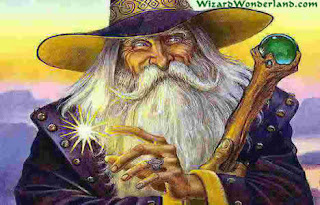
http://www.wizardwonderland.com/merlin.htm
Just a simple bit of mathematical wizardry!
Let's say you wanted to play a 340 year old Dwarf, the equivalent of an 87 year old human. First, we subtract 340 from 350 - the average maximum age for dwarves. Then, we divide 10 by 88 (to get 11% physical) and 35 (to get 29% mental).

So our Dwarf has 11% of their physical stats remaining and 29% of his mental stats remaining. This doesn't apply to the highest ability score, but it basically guarantees that all of the other stats will be at 7.

For reference, here's what 7's mean in each stat:
  • Strength 5 = as strong as a Kobold or Baboon. Not as strong as an Goblin.
  • Dexterity 5 = as agile as a Purple Wormling. Not as agile as a Camel.
  • Constitution 5 = not quite as hardy as a Bat, Owl, or Hawk.
  • Intelligence 5 = as smart as an Orc or Troll. Not as smart as a Kobold.
  • Wisdom 7 = as wise as a Kobold or an Ogre. Not as wise as a Frog.
  • Charisma 7 = as influential as a Cat or Owl. Not as influential as a Lion.

So, obviously, we're not really playing with a heavy hitter here. But if the dwarf was a spellcaster who didn't really need a secondary ability, they could still be extremely effective in old age. I like that, since it promotes old Wizards but not old Warriors.

One last thing: the true maximum age of a humanoid is when their age hits 1 1/3 of the average maximum. When they reach that age, they die, unless they have some magic sustaining them (see below). However, each year on their birthday, if their age has exceeded the average maximum, they must roll a DC 15 Constitution saving throw. On a failure, they contract a wasting disease that will kill them within the year.

So basically, the average maximum age is the age where you have to stop adventuring and start worrying about things killing you simply due to your body being unable to handle it.

Time... ... Is Still Marching On


But why stop there? This is a fantasy world! Let's get wild.


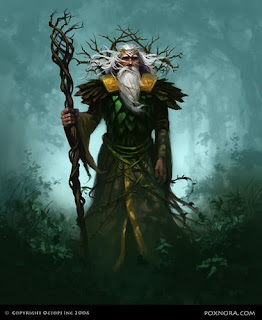
https://www.poxnora.com/
My name is the Lorax and I'm as old as a tree
Sometimes, by magic or pure tenacity, a character will exceed the "maximum" lifespan of their race. If a character has retired and keeps making lucky Con rolls to avoid wasting diseases, then more power to them. But what about ancient adventurers and NPCs?

Powerful magic items exist to extend the vitality of those who wield them. Many allow their owner to live well longer than expected, and few legendary items can grant true immortality - though not always perfectly.

Items have different bonuses based on rarity and always require attunement:
  • Uncommon: 25% bonus
  • Rare: 50% bonus
  • Very Rare: 75% bonus
  • Legendary: 100% bonus

This bonus is added directly to the aging percentage (max 100%). So if your 340 year old Dwarf had a Very Rare Physical Ability item, his percentage would be 86% instead of 11%. This would continue into negative percentages - at 416 years old, the age penalty (negative 75%, or -66/88) would completely negate the bonus and the dwarf's stats would drop to their lowest level.

Additionally, until the dwarf reached 328 (25% physical stats remaining) they wouldn't age at all (since 25% + 75% = 100%). So it could extend your life, but it will certainly stave off the effects of age.

Items should only affect certain stats, for the most part. For example, Physical Stats, or Mental Stats. Restricting to a single stat is also feasible, since the Talisman of Immortal Strength would let the barbarian pick Con as his "immune to old age" stat.

If an item affects every stat, its rarity is increased by 1 level. So there's no Legendary item to grant 100% age bonus to all stats.

A single character can only have one bonus to each stat. So if you have the Very Rare Physical Ability talisman but also the Legendary Constitution necklace, your bonuses would be:
  • Strength: 75%
  • Dexterity: 75%
  • Constitution: 100%

Kings and Wizards hoard such items, and pay massive amounts of gold to have them. Additionally, this means that an ancient wizard may well have used all their attunement slots just to maintain their form. That's pretty neat.

I also like the idea that to truly be immortal, you're going to have to find multiple items. And the Legendary Items would probably be limited to a single stat.

That's cool. What if only one ability survived?
  • Immortal Strength: A mindless brute, existing only to fulfill its final purpose, a guardian lost to time.
  • Immortal Dexterity: Nothing but a wisp of wind, carried by its former whims.
  • Immortal Constitution: A statue, held timeless in a spot it cherished in life.
  • Immortal Intelligence: A sentient tome or record of knowledge, only able to recall things regarding a single event or person dear to its former self.
  • Immortal Wisdom: A being of pure light, capable of giving advice but unable to interact with or explore the world.
  • Immortal Charisma: A sentient object, such as a crown or sword, that overbears its wielder and forces them to complete its former purposes.

I have no mouth but I must scream
Sounds like some good lore to build NPCs and magic items on. Plus, now you can make crotchety old wizards!

Thanks for reading!

Monday, August 14, 2017

Monday Recap: Campaign of Chaos

https://www.reddit.com/r/aww/comments/5bukoz/youre_a_lizard_harry/
You heard the lizard-man
I mentioned a couple weeks ago that I would be starting a new campaign soon. Well... here it is. This one is going to require some explanation...

Basically, at the end of my last big campaign, one of the characters got a powerful magic item: the Deck of Many Things. The character, one Daardendrian Krivxeros (aka Mr. Lizard the Chaos Wizard), immediately drew a bunch of cards. He changed to an evil alignment, lost many of his magic items, and gained a couple wishes. Fortunately for the world, he immediately hit the 33% chance of never casting Wish again (PHB pg. 289).

However, in his travels he had come across a tome of eldritch knowledge: how to use the power of the Gods to bring the Outer Plane of Limbo into the Inner Elemental Planes. Basically, it would create a fifth element: chaos. The multiverse would be rewritten, and the world would be plunged into chaos. Living things may not survive.

However, such a ritual was way too large and complicated for a lone evil chaos sorcerer who had recently lost all his magic items and couldn't cast wishes. So, he decided to do some recruiting, creating a group of minions similar in size to his previous adventuring squad. With their help, Mr. Lizard the Chaos Wizard hopes to kill one million mortals in the name of chaos. And then destroy all of everything. Or something like that.

This story is part 1 of a series. The campaign is complete.
| Previous Campaign | Part 1 | Part 2 | Part 3 | Part 4 | Part 5 | Part 6 | Part 7 | Part 8 | Part 9 |

Campaign of Chaos


This story began in a prison, the Raven's Nest Asylum, to be exact. Though a plain building from the outside, it housed many of Garton's more dangerous and unusual criminals. The guards wore helms that masked their identity, carried magic swords, and weren't afraid to die to protect the prison. Magic-using criminals had their power suppressed by a powerful enchantment.

The guards brought a newcomer, Bill the Meek, to his prison cell. Bill was being jailed for a minor crime, and asked the prisoners around him what they were in for.

https://hellstern.deviantart.com/gallery/
Shut, up, DAD
Cressen Juhl (Shannon) spoke up first. He was a Fallen Aasimar, the son of the God of Law Pholtus. However, he had rejected his dad's dogma and become a Trickery Cleric of Ralishaz, God of ill luck and insanity. He was in jail for selling fake potions on the black market, mostly in an attempt to annoy his dad.


https://littlefiredragon.deviantart.com/art/khajit-bowman-440273765
He can shoot shinys at 50 yards


Next, a Tabaxi Rogue introduced himself, saying his name was Silent Mist of Distant Rain, though he went by Mist (Cody). He had stolen a diamond codpiece from a noble in Garton, and was captured after showing it off in a tavern the noble frequented. He loved shiny things and wanted to get out and get more of them.
https://sonicfreak66.deviantart.com/art/Darkling-85189536
Stabby stab

A Darkling named Jakky (Quinn), a small creature whose skin was burned by light, spoke from beneath his pile of cloaks and rags. He was arrested for being an assassin, using his Monk-like training to perform jobs within the city.


All hail the tentacle lords!
Next, a Kobold introduced himself as Agne (Wade). He was a Warlock servant of the Great Old Ones, who had instructed him to slaughter his tribe in exchange for power. After he did so, he moved on to the humans of Garlancia, which were near the Fractured Mountains he once called home. He was quickly arrested and jailed due to his unusual powers.


http://toodletots.tumblr.com/post/157620592689/its-been-a-while-since-ive-done-a-marker-draws
A magical life lesson will be learned today!
Before anyone could stop him, a Drow Transmutation Wizard who was named Rivrellok Nightarrow (but went by his stage name Magic Man) (Wes) launched into a gruesome story about how he had used his magic to "reward" some war heroes with gold - which filled their stomachs until they exploded. He was arrested and told to go to jail, which he voluntarily did so via teleportation.


http://www.zoelacchei.com/profile.html
Frankie says relax
Finally, a Yuan-Ti Pureblood named Ilsa (Cait) spoke up. She was an agent of the Yuan-Ti from the distant North, and had initially come to Garlancia to reclaim the Yuan-Ti's ancient territory. However, she had slowly become insane, and was approached by Vecna, the lich-god of evil secrets. He had granted her the powers of a Soul Knife Mystic, and whispered strange things to her. She called him Frankie.

Bill was freaked out by all these stories. He was just in here because he stole a vase and the other prisons were full.

The prisoners went about their business in the prison for a few days, and as they did so, they gathered some information. They saw a strange painting-like object covered in a sheet being moved into the prison. They heard about a strange floating castle full of giants, a volcano in the Fractured Mountains that held some powerful artifacts, and a mysterious organization known as the Black Hand that was trying to infiltrate Garton.

One day, they noticed the sky suddenly turned dark and stormy. Screams were heard form below, and then silence. A figure wearing robes and a guard's helm walked into their cell area. He took off the helm and revealed himself to be a Red Dragonborn magic-user. His name... was Mr. Lizard.

He offered them freedom if they pledged themselves to chaos and its ways. They all agreed, and he set them free using his powerful chaos sorcery.

One by one, he took their hands, blessing them with chaos magic. One guy exploded from the stress. However, they all received strange powers of foresight and chaotic knowledge.

(This is something new I'm trying to make the campaign a bit more unpredictable... each player has the ability to give me a specific piece of information about a place or NPC they meet. For example, Wes can determine an NPC's flaw. This makes the game a bit less predictable, and shares the narrative a bit more. It's a bit experimental for my playstyle, but we'll see how it goes. Needless to say, they abused it immediately in their first encounter.)

Mr. Lizard lead them past the carnage he had caused and into the guard storeroom where everyone's equipment was kept. After they had suited up, Mr. Lizard told them he was going to the zoo, and to make a diversion. As he roller-skated through the walls, they heard the sound of guards coming towards them.

The motto for this campaign
The other prisoners and the guards clashed, but the main party decided to take advantage of their new chaos powers. Cressen made them all worshippers of Illmater, god of Martyrs, and Magic Man made their flaw that they were willing to die for one another. They immediately began jumping in front of blades meant for their allies, finishing themselves off rather quickly. However, many of the prisoners were killed, leaving only a few remaining (a group which of course consists of the PCs. And Bill the Meek.). They grabbed a couple magic helmets and swords.

They went down into the prison's basement, looking for the mysterious picture frame that they had seen being brought into the facility. They eventually found it in a secluded basement, and realized it was a portal. They discovered this because a platinum-scaled dragon was poking its head out of the painting.

Cressen was nervous about trusting the dragon, since a platinum dragon would likely worship Bahamut, the God of Good Dragons, but this dragon seemed to be a defector. Ilsa mentioned that he might have been framed.

The group leapt into the painting and realized they were indeed in a magical zoo, with dozens of strange and terrifying creatures running around. Mr. Lizard was here, freeing creatures and letting them loose into other planes. The group freed the Platinum Dragon and watched it disappear into the sky.

Bill the Meek approached Mr. Lizard, meekly of course, and asked if he could go home - chaos seemed to much for him. Nearly immediately, he was eaten by a horrible monster. Mr. Lizard mentioned that he should have trusted in chaos more.

The group began helping Mr. Lizard free monsters of all kinds, while Mr. Lizard explained that this portal had once been housed at the Mage's Guild, but was moved here for safekeeping after the events of the War of Fools. He was hoping to find a suitable pet for his adventure of chaos.

Google "lizard holding staff"
He broke open a gemstone containing a sleeping man, who immediately shouted that he wasn't supposed to be awake. Sure enough, a moment later his chest exploded and a larva-like creature slithered out of it. The party captured the little beast and Mr. Lizard claimed it as his familiar. He told them it was actually a baby Slaad, a creature of pure chaos.

Having got what he came for, he released the rest of the beasts and the group began their escape. The prison was nearly empty by this point, and Mr. Lizard decided to simply walk out the front gate. Wearing his identity-masking helmet, of course.

However, as soon as they had stepped outside the prison, they were confronted by the captain of the guard, Floris, and an armed patrol of guards. However, a wave of the chaos staff by Mr. Lizard sent them scattering. One guy thought he was on fire, another guy broke down because he believed he wasn't immortal anymore, and another guy just decided he didn't really trust horses anymore.

Floris, however, got the worst of it - his arms disappeared, causing his sword to clatter to the ground. He immediately realized that this must be Mr. Lizard behind the helm of anonymity, and swore to find him. Meanwhile, Mr. Lizard and his new posse simply strode out of the city.

In the forests beyond the city walls, the group was safe - for now. Mr. Lizard decided they would need to do another trial of chaos in order to prove themselves worthy. He sent them to the ethereal plane, where they fought a series of shades with strange abilities.

They fought a couple magical foes (Cody's other character Rolen and Shannon's former character Aethryn), a thief (Wade's former character Voronion) and an archer (Wes' former character Legolad), and two barbarians, one who did backflips and one who was joined by a large animal (Quinn's former character Rank and Cait's former character Amafrey with her animal companion Hunee).


Surprise!
While they fought, their new chaos magic kept manifesting. Magic Man had his legs turned into trees and his skin into slime, but he seemed pretty happy about it. Jakky, on the other hand, had his skull shrunk until it killed him.

Finally, a red dragonborn bard appeared, and cast such a powerful spell that the whole chaos posse was floored. Mr. Lizard waved his staff and dismissed it, saying that he hadn't meant for that to show up.

He ended the ethereal vision, which healed the group's injuries and brought Jakky back from the dead. However, his skull was a bit smaller, and Magic Man still had a bit slimier skin.

Mr. Lizard struck his staff on the ground and it swirled into a new item - a deck of cards. He asked the group if they wanted to truly give themselves over to chaos - if so, they should draw a card from the Deck of Many Things.

Mist immediately grabbed one. It was the Fool card, which had no apparent effect. However, it did allow him to draw another card, which gave him the Key card.

Immediately, the group gained a powerful magical item each. Cressen obtained a set of Wings of Flying, Mist gained a Portable Hole, Jakky got a Cloak of Displacement, Agne received a Staff of Swarming Insects, Ilsa found a Rope of Entanglement, and Magic Man got a set of Nolzur's Marvelous Pigments.

The group pledged themselves to chaos, and the quest to upend the multiverse had begun.


Your new, monocled god
This is going to be an interesting and ambitious campaign for me, and I'm excited to give it a shot. I'm working with Cody, who actually played Mr. Lizard in the previous campaign, to get some ideas about what we can do. Of course, I'm bringing a few of my own to the table as well.

Next week, I should have an update on our next session of Maze of the Blue Medusa. After that, I might be taking a break for a bit, since the month of September is going to be very busy for a lot of my players and I don't know how much D&D we'll be able to squeeze in. The end of the year is always harder to schedule.

Thanks for reading!