Showing posts with label Gods. Show all posts

Friday, December 8, 2017

Lore of Ahneria: Life after Death

https://www.deviantart.com/art/Zack-Fair-Final-Fantasy-VII-Crisis-Core-645894939
This is part of a series on the lore of my homebrew world, Ahneria. As I outlined here, much of this information will be pulled from existing D&D lore and tropes. At the end, I'll be including a section on how to use this sort of thing in your own games.

Also, I'd be remiss to mention that I took a lot of inspiration from this post at Power Score.

Now that we know what the Gods are up to, let's figure out what these mortals are, exactly.

Mortals in Ahneria were crafted in the image of their Gods. However, the first mortals came about because of an experiment: could you make a creature without a divine spark? The answer proved to be yes, and it revealed something interesting about the nature of Gods and what a soul is.

A soul is not a thing in itself, but more like a vessel. It is the thing that contains the spark of divinity. In the absence of such a thing, the soul gains the will to determine their own alignment. They aren't defined by their spark, though they can still interact with and affect sparks.

As long as the mortal exists as a free-willed creature, its soul lacks an alignment. In this way, the alignment of a character is the result of their intent to behave a certain way. In reality, they won't have an alignment while they are alive.

Note that this isn't true for all creatures. Most monsters are born with an alignment infused into them, meaning they are more like the immortals than mortals. The difference between a God and a monster is that the monster's bodies are able to be destroyed by mortal hands. A true mortal, on the other hand, is guided by nothing more or less than their impulses and philosophies, making them unique among the multiverse. In the terms of the game, these creatures are called "humanoids".

https://sandara.deviantart.com/art/HnP2-wallpaper-211228898
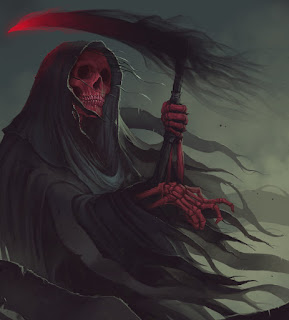
A soul might drift towards certain alignments when it is alive, but when it dies, it travels to the Raven Queen to be judged. Above her fortress in the Shadowfell, a massive tempest of souls is filtered through portals to the planes that most align with their deeds and philosophies in life. Occasionally, the Raven Queen will pull a particularly powerful or important soul from the masses to be judged personally.

If a God or fiend has claimed a soul (which is usually only possible with the mortal's consent) their soul is marked with the sigil of that immortal, which draws it through a particular portal to a particular plane.

If a soul bears the Black Feather Brand, it is destroyed upon death.

After a soul is sorted into the Outer Planes, they become what is called a petitioner. In some planes, these are the lowest and most pitiful ranks, the manes of the abyss, the lemures of the nine hells, the soul larvae of Gehenna. Or, they become the foot soldiers of the plane: the holy armies of Mount Celestia, or the animal hoard of the Beastlands.

As a petitioner, a few things happen. First, you slowly lose your sense of self. Over the course of 200 years, you lose your memories, your personality, and your physical form. This leads to the varying levels of resurrection effects that clerics can cast - it requires more magic to recover an older soul.
  • Revivify: 3rd level spell, time limit 1 minute. The soul has only just arrived at the outer plane.
  • Raise Dead: 5th level spell, time limit 10 days. The soul has lost much of their physical form and must spend some time recovering.
  • Reincarnate: 5th level spell, time limit 10 days. This spell circumvents the degradation of physical form by creating a new body for the soul to inhabit. Unfortunately, this process is random.
  • Resurrection: 7th level spell, time limit 100 years. The soul has lost all of their physical form and much of their memories. Casting the spell transfers part of the soul of the caster into the target to make up for this, meaning the soul returns with its memories but the spellcaster suffers heavy penalties as a result.
  • True Resurrection: 9th level spell, time limit 200 years. This spell is considered nothing short of a miracle. A deity intervenes, allowing a soul that is nearly completely disintegrated to return fully, at little cost to caster and target. Instead, the deity themself takes on the burden of the spell.

https://af-studios.deviantart.com/art/guardian-of-souls-133463149
After a soul has been completely absorbed into the plane they were sorted into, there are still a few options to go from there. First off, they haven't stopped existing: there's just nothing left of their soul that remains to identify them. Thus, they often take on the characteristics of other creatures of their plane. They become celestials, demons, devils, or are simply absorbed into the environment of the plane.

If they do happen to retain some sentience, they can begin to gather sparks of their alignment and gain power. Lawful planes usually feature a system of promotion, whereas chaotic planes often allow promotion if a creature adheres to the tenants of the plane particularly well.

The leaders of these planes are mostly the Gods whose sparks are aligned to the plane. However, some are notable as petitioners who rose so far up the ranks as to be counted among the leaders of the plane. The most infamous examples are likely the current roster of demon lords. With a few exceptions, they rose from the mud of the abyss and overthrew the previous Lords of Chaos which ruled over the plane.

So if the souls of mortals are whisked away to the outer planes, then what are all these undead still around here for?

Well, that depends. A particular undead creature is caused by a particular effect, and there are many such effects that can lead to the phenomenon of undeath.

The most common way to create undead is for a necromancer to infuse a body with energy from the Shadowfell or the Abyss. Energy of the Shadowfell can be summoned by the Animate Dead spell. Abyssal energy is more difficult to access, requiring the powerful Create Undead spell.

https://andantonius.deviantart.com/art/Well-of-Souls-299208000
The most basic of Shadowfell creatures is the Shadow (MM pg. 269). Shadows are what is left behind when a soul is brought to the plane of Mount Celestia. Long ago, Nerull, striking back at the Gods of Good, began to siphon off the shadows of those who were purest of heart, since those who travel to Mount Celestia leave no trace of darkness in their wake. These Shadows are drawn to pure souls, clawing at that which was stolen from them. Thanks to the perversion of Nerull, however, they only succeed at making more Shadows.

An Animate Dead spell summons Shadows to inhabit corpses (to create Zombies (MM pg. 315)) or piles of bones (to create Skeletons (MM pg. 272)). The Shadow loses some of its power, but the spell forces the Shadows to become subservient. Lesser Shadows can be summoned to create Crawling Claws (MM pg. 44), or a more powerful Shadow can be summoned into a wizard's corpse to create a Flameskull (MM pg. 134).

On the other hand, there are several undead that form due to the Abyssal energy used in a Create Undead spell, or in a location that is somehow connected to the Abyss. Ghouls (MM pg. 148), Ghasts(MM pg. 148), certain Gnolls (MM pg. 163), and Mummies (MM pg. 227) are all products of Abyssal energy infusing a corpse, either accidentally or purposefully. The process of creating a Mummy or Mummy Lord is actually an ancient, ritualistic form of the Create Undead spell, practiced by long-lost civilizations.

Sometimes, a soul dies with a strong enough bond or ideal that they choose not to pass into the outer planes. These can come in many, many forms. A creature with an unfulfilled bond becomes a Ghost (MM pg. 147). A creature who kills itself while its soul has been placed in a Phylactery becomes a Lich (MM pg. 202) or Dracolich (MM pg. 83). A Naga bound to guarding a single location can persist after death, becoming a Bone Naga (MM pg. 233). A creature wrongfully slain can become a Revenant (MM pg. 259). A Beholder can dream itself into undeath as a Death Tyrant (MM pg. 29).

https://samarskiy.deviantart.com/art/Army-of-Undead-538280770
Other times, a creature's soul is prevented from passing on. A Vampire's curse (MM pg. 295) prevents a creature from passing on. A paladin that breaks their oath might be rejected by the Immortals and become a Death Knight (MM pg. 47). An Elf that suffered too much vanity is often rejected by Corellon Larenthian, returning as a Banshee (MM pg. 23).

However, barring these greater powers affecting a soul, souls sometimes are simply prevented from passing due to odd coincidences of magic: an area infused with dark energy, a spell cast to prevent the soul's release, or some barrier (such as a Hallow spell) preventing the soul from travelling away from the material plane. In these cases, most souls become Specters (MM pg. 279), frustrated and angry that they cannot move on.

In some cases, particularly evil souls might become Will-o'-Wisps (MM pg. 301) instead. These creatures retain intelligence and even personality, and are too powerful to be summoned by Animate Dead. However, a Create Undead spell can summon them into a corpse, creating a Wight (MM pg. 300). This process is occasionally performed by powerful necromancers, but is routinely undertaken by various Immortals of Undeath, such as Orcus of the Abyss.

Finally, sometimes the powers and magic combine. A soul that has been promised to a dark power but is unable to pass on might undergo a transformation into a Wraith (MM pg. 302). In this instance, the soul vanishes completely, becoming essentially an elemental of the Shadowfell, gaining the powers of Shadows and the ability to prevent souls from passing on, creating Specters of its own..

For many religions, the doctrine provides a path to become a petitioner and serve an Immortal after death. Mortals find comfort in this thought, that after they die there will be at least one part of them that continues on. To be prevented from passing is a fate that no mortal wishes. Thus, though all undead are treated with revulsion, those who failed to pass on have a special place of fear in the hearts of mortals.
https://saikayden.deviantart.com/art/Shadow-of-the-Undead-444842564

Using This In Your Game

  • Figure out how souls work in your world
  • Explain alignment: how does it work for mortals? For Immortals? For the PCs in particular?
  • Who judges the souls? Are they benevolent?
  • How do the resurrection spells work in your setting? Why are there time limits on them?
  • How does undeath work in your setting? Are there different kinds? Who causes it?
  • How do people see death and the afterlife?

Thanks for reading!

Friday, November 17, 2017

Lore of Ahneria: Gods

This is part of a series on the lore of my homebrew world, Ahneria. As I outlined here, much of this information will be pulled from existing D&D lore and tropes. At the end, I'll be including a section on how to use this sort of thing in your own games.

In the beginning, there was Light and Dark. Life and Death. Growth and Decay.

They formed intention, coalescing into two opposed beings: Pelor, God of the Sun, and Nerull, God of the Void.

The stars were Pelor's first domain, burning so brightly that the coldness of space could not snuff them out. The warmth of these stars began to spread to the worlds surrounding them, granting them nurturing heat and light. Soon, Pelor's influence spread beyond the plane of positive energy, and he took command of the elemental planes.

Nerull, realizing he was losing ground, divined a plan: he would split his godly essence into shards, hundreds of thousands of them, though he kept most of his power for himself. With these shards he began to populate the lower planes with beings whose powers mirrored his own. The first Demon Lords, Archdevils, Elemental Princes of Evil, and Dark Gods were born. Many of their names are lost to history, replaced by those who would come later. But now Nerull had an army, legions he could command to destroy Pelor's light.

Pelor, in kind, created his own subordinate Gods. Celestials formed, Gods of Light reigned the upper planes, and the Elemental Princes of Good fought back among their planes. The war between light and dark became a thousand struggles, rather than a single confrontation.

A divine spark granted power over a "Domain", but also bound a creature to serve the aspects of that domain. A shard granting the domain of water also forced its owner to take on the chaotic aspects of the element. The idea of a moral alignment was formed.

It was at this time mortals began appearing on Pelor's worlds. These primordial races were the curiosities of the Gods: could beings survive without a divine spark? How would they behave if not bound to an alignment? Could they serve? Could they fight? Many died out, as their patron Gods were defeated in cosmic warfare. The most prominent survivors were the humans (Pelor's race), the elves (Corellon Larenthian's children), and the dwarves (the creation of mighty Morodin). They were created closely in the image of their patrons.

The battle between light and dark continued to rage. The Feywild and the Shadowfell formed, allowing their respective forces a more direct route to the material plane (which was a common battleground). The currency of war was the divine shards that had come from Pelor and Nerull. Redeeming or corrupting a shard was a victory for these immortal warriors, who could otherwise never die.

https://morkardfc.deviantart.com/art/Nerull-625785068
Above the conflicts, Pelor and Nerull guided their forces, hoping to gain the upper hand. They were nigh-invincible: no immortal could hope to match their power, or steal a shard away from them.

That is, until a sorceress, now known only as the Raven Queen, rose from the ranks of mortality and obtained hundreds of divine shards, making her like a Goddess on her own world. Realizing the endless struggle of life and death could not be quenched, she offered her power to Pelor in hopes of destroying Nerull once and for all. He turned her down.

Despite this, the Raven Queen chose to face Nerull anyway. Though she had kept relatively quiet up until this point, this battle shook the heavens. A mortal had stolen enough shards to stand before one of the Over-Gods. And not only that: she had prevailed. Nerull's shards were broken, scattered, and divided.

Try as she might, the Raven Queen could not take in the amount of divinity Nerull had still retained. Indeed, the immortals were in awe at how much power Nerull still held, and how exactly the Raven Queen overcame such strength is still questioned and debated. She chose three of his strongest domains (Death, Fate, and Winter), making sure they contained aspects of neutrality, and took her place as a true Goddess.

However, the confrontation and the victory were small events compared to what happened next. Pelor, who had declined to help the Raven Queen, stepped in, channelling the countless shards of Nerull into the creatures of the material planes. Now, they were so small that they no longer had power over a domain, miracles, or even a predisposition towards evil: simply a spark of darkness deep within them.

Dark Fey, aberrations, undead, evil elementals, chromatic dragons, and monsters filled the worlds. The shards would not birth new evil gods, but as a result, the multiverse was filled with horrors. Some were shaped further by the dark gods, however, as Gruumsh birthed the Orc races and Maglubiyet spawned the goblin hordes.

This greatly concerned the Gods of Light, and many began to redeem these creatures to bring new races into the world: Metallic Dragons, Summer Fey, Good Elemental creatures. The Gnome and Halfling gods spread their races far and wide, hoping their predisposition for community and friendliness would overcome the now-pervasive darkness.

But something happened that the Immortals didn't anticipate. The mortals, unbound from alignment, began to fight for good. Not all of them, of course, but many realized that unless they chose to oppose evil, they would die. The immortals, bound by alignment and undying, hadn't realized how strong this survival instinct would become.

However, an unspoken pact was formed among the Gods. Now that it was known that divine shards could be stolen from the Gods, the Immortals decided that the mortal races shouldn't have the opportunity to gain such power again. Of course, this pact was far from perfect, and mortals such as Vecna and St. Cuthbert ended up making their way into the pantheon.

https://jeffsimpsonkh.deviantart.com/art/Snow-White-and-the-Hunstman-Ravenna-early-concept-306096034
The Gods also began to focus on the redemption and corruption of mortals. In a world full of evil monsters, the Gods of Light needed as many champions as they could get. But in a multiverse dominated by Pelor, with no one to match him, the Gods of Evil would snare any modicum of power they could get their hands on. The battlefield once again shifted to a yet smaller scale.

And so, in this age of Light, does  the fate of good and evil lie in the hearts of mortals, unbound by divine alignment, able to choose their path: towards light, or into darkness.

Gods in Ahneria


There are many Gods that are worshipped in Ahneria. In truth, these are merely creatures that have enough divinity to shape reality and the planes to suit their whims.

However, all planes connect to the material plane, the ultimate battleground for this cosmic conflict. Gods must tread lightly here, for interference in mortal affairs will surely bring the wrath of a rival God. The machinations of Gods on the material plane are slow, quiet, and shrouded. A God never acts directly.

In different areas of the world, Gods have different names. Humans mostly know the Gods by the names they use in Greyhawk (PHB pg. 295). This is no coincidence - the Archmage Mordenkainen, while travelling through time, visited Ahneria when it was still young.

However, the other races have their own names and images for the Gods. On the elven continent of Jeonju, the nature God Obad-Hai is known as Rillifane Rallathil. The Dragons worship Chronepsis, Dragon God of Fate, though in the human lands she goes by Istus. And the Orcs, lovers of war, worship Haxtor, even if they call him Ilneval.

The Gods themselves have a ranking of power that can be clearly defined. They can use stats found here unless otherwise specified.
  • Over-Gods: currently, only Pelor has this level of power. For combat purposes, he is unkillable.
  • Greater Deities: CR 40+. Controls an entire race, a major domain, or the majority of an outer plane.
    • Moradin, Corellon Larenthian, Boccob, Obad-Hai
  •  Intermediate Deities: CR 35+. Less powerful, controls a smaller race or domain
    • The Raven Queen, Ralishaz, Bahamut, Istus, Garl Glittergold
  • Lesser Deities: CR 30+. Controls an evil race or a niche domain
    • Fharlanghn, St. Cuthbert, Vecna, The Giant Gods, Gruumsh, Lolth
  • Demigods: the half-children of the Gods.
    • Powers range wildly: they could be mortals with magic powers or an extended lifespan, or they could be as strong as Empyreans
    • Pelor has a son named Raynathius who is particularly powerful
  • Titans: beings constructed by the Gods.
    • Could be through magic, physical construction, the ground where a God's blood was spilled, etc.
  • Avatars: a vessel for a God that allows it to travel outside its domain without fear of harm
    • A God can create an avatar at any power level below theirs. Thus, a Greater Deity could make an avatar as strong as an Intermediate Deity or as weak as a mortal.
    • Since the death of an avatar does not affect the God using it, nearly all Gods conduct business as their avatars. A god can only create one avatar at a time, thus they usually keep their true form hidden away in a secret and well-guarded location.
  • Aspects: an independent creature which embodies part of a God's personality, principles, or domain.
    • An aspect can be any form that is two power levels below the God themselves. Thus, a Greater Deity can make Aspects as powerful as a Lesser Deity or as weak as a mortal.
    • Gods have a limit on how many aspects they can create. In most cases, this is approximately equal to their CR.
    • To most mortals, an Aspect is their God. In fact, many Clerics only ever interact with Aspects, and are none the wiser. An aspect can take any form, and its form can be changed by its God at will.
    • Aspects are utterly loyal to their God. They serve as the Generals and Advisers to their deity.
  • Vestiges: No combat stats. These are ancient gods that have lost all their shards. A powerful ritual might allow a mortal to converse with them or even gain some modicum of power, but they can grant no divinity.
    • Nerull, Astraroth, Zhudun the Corpse Star

Finally, outside the domain of the entire multiverse, are what mortals refer to as The Great Old Ones. These are the leftovers from the creation of the multiverse, before even Pelor and Nerull. Who made them, and by what device they grant power to certain mortals, is beyond the comprehension of Mortals and Immortals alike.

If you wish to become a God, there are a few known methods.
  1. Kill a God and obtain their spark. (Proven by St. Cuthbert, who killed a Lesser Deity of Injustice and gained divinity)
  2. Steal enough of a God's worshippers that the power of their domain transfers to you. (Proven by the Raven Queen, who gathered hundreds of shards in this manner)
  3. Use the power of vestiges to overcome Gods and destroy them. (Proven by Vecna, who did this multiple times)
  4. Ask a God really, really nicely if you can have a shard. (Some say this is how the Raven Queen defeated Nerull)

Finally, I have to mention Pelor's personal aspects, since they are extremely powerful and legendary throughout the multiverse. They are known as the Solars, twenty-four beings of perfect Law and Good. It is well-known that Pelor could create many more aspects, but either they are hidden away, or he has chosen not to.
  • Acies: epitome of empathy
  • Amina: epitome of spirit
  • Capitosus: epitome of knowledge
  • Curabitur: epitome of bodily skill
  • Duri: epitome of endurance
  • Exponentia: epitome of magic
  • Fidelis: epitome of faith
  • Mendacium: epitome of concession
  • Nequitia: epitome of cleverness
  • Praestare: epitome of artistry
  • Praeteritum: epitome of lore
  • Prodigium: epitome of the hunt
  • Salvos: epitome of willpower
  • Sanitatem: epitome of healing
  • Sapientiae: epitome of instinct
  • Secandi: epitome of speed
  • Sensus: epitome of awareness
  • Statera: epitome of balance
  • Suadere: epitome of logic
  • Tacet: epitome of silence
  • Terra: epitome of nature
  • Terrent: epitome of awe
  • Verum: epitome of truth
  • Viribus: epitome of power


Using This Material in Your Setting


  • Use the Gods to define the central tension of your setting (in this case, Good vs Evil)
  • Give the Gods fears, weaknesses, and flaws (they fear their divinity being stolen away)
  • Give the Gods history that can be spun into lore (the breaking of the divinity, the Raven Queen)
  • Give the PCs a way to interface with the Gods (avatars, aspects, demigods, titans, vestiges)
  • Create a reason why the Gods don't take care of all their problems (danger of retaliation by other Gods)
  • Create a reason why Gods are interested in mortal souls (power in the cosmic struggle)
  • Create power levels for your Gods (Over-Gods, Greater Deities, etc)
  • Give the most powerful Gods an extra leg up (Solars)
  • Create horribly difficult ways to become a God (kill/steal/overpower/beg)
Thanks for reading!

Wednesday, March 22, 2017

Powering Up: Greater Feats


Get your Greek on
This post is going to be a lot less rambling philosophy that most of my others. A few weeks ago I posted an article about creating Demigods, and I wanted to follow up with an idea I had there: empowered feats as the sign of a demigod.

I think I might hit on this topic one more time, perhaps to talk about class-specific feature enhancements that could reflect a godly level of power within the confines of each standard class. This would be a wizard getting a bonus directly from the god of magic, or a fighter getting a blessing directly from the god of war. I think there could be a neat feature that could reflect that.

Anyway, really, this article isn't going to be me rambling. I promise. In fact, since we already know the premise, let's just get on with it.


Greater Feats


Aegis (based on Shield Master): Attacks rarely strike you, you move a shield in the way with supernatural speed.
  • If you take the Attack action on your turn, you can use a bonus action to try to attack or shove a creature within 5 feet of you with your shield. The attack deals 1d6 bludgeoning damage.
  • If you aren’t incapacitated, you can add your shield’s AC bonus to any Dexterity saving throw you make against a spell or other harmful effect that targets only you.
  • If you are subjected to an effect that allows you to make a Dexterity saving throw to take only half damage, you can use your reaction to take no damage if you succeed on the saving throw, interposing your shield between yourself and the source of the effect.
  • You may take a reaction on every turn of combat to use the above ability.
Bladelord (based on Weapon Master): You have mastered every weapon in the world, and can best those with years of training.
  • Increase your Strength or Dexterity score by 2, to a maximum of 22.
  • You gain proficiency with all simple and martial weapons.
  • While wielding a weapon, you deal +2 damage of that weapon's type.
Bloodthirsty (based on Savage Attacker): You can barely contain yourself when you enter combat, craving the blood of your foes with unnatural hunger.
  • Once per turn, you may deal maximum damage instead of rolling damage dice.
Bonded Mount (based on Mounted Combatant): You connect immediately with your riding mounts, acting as one.
  • You have advantage on melee attack rolls against any unmounted creature that is smaller than your mount.
  • You can force an attack targeted at your mount to target you instead.
  • If your mount is subjected to an effect that allows it to make a Dexterity saving throw to take only half damage, it instead takes no damage if it succeeds on the saving throw, and only half damage if it fails.
  • While mounted, you gain all the senses of your mount and can communicate simple ideas telepathically with your mount.
  • If your mount has a swimming speed, you gain the ability to breathe underwater while mounted.
  • If your mount has a burrowing or climbing speed, you can remain mounted while it moves in this way without making a check.
Deadeye (based on Sharpshooter): You have gained supernatural accuracy with ranged weapons.
  • Attacking at long range doesn't impose disadvantage on your ranged weapon attack rolls.
  • Your ranged weapon attacks ignore half cover and three-quarters cover.
  • You ignore the loading property of weapons you are proficient in.
  • Being within 5 feet of a hostile creature doesn't impose disadvantage on your ranged attack rolls.
  • Before you make an attack with a ranged weapon that you are proficient with, you can choose to take a - 5 penalty to the attack roll. If the attack hits, you add +15 to the attack’s damage.


Always look forward to greatness!
Elemental Master (based on Elemental Adept): You are as an avatar of the elements, destroying those who would stand against your might.
  • When you gain this feat, choose one of the following damage types: acid, cold, fire, lightning, or thunder
  • Spells you cast ignore resistance to damage of the chosen type, and treat immunity to the chosen type as resistance.
  • When you roll damage for a spell you cast that deals damage of that type, you may treat any 1 or 2 on a damage die as a 3.
  • You may select this feat multiple times, but you must chose a different damage type each time.
Farspell Lord (based on Spell Sniper): Nothing escapes your magical grasp, no matter where they hide.
  • When you cast a spell that requires you to make an attack roll, the spell’s range is doubled.
  • Your ranged spell attacks ignore half cover and three-quarters cover.
  • When you cast a spell that requires an enemy to make a saving throw, the spell’s area of effect is doubled by it's largest dimension.
  • Creatures don't gain the benefits of half cover and three-quarters cover when making Dexterity saving throws against your spells.
Fortune (based on Lucky): Everything seems to go your way, no matter how bad the situation might be.
  • When you roll a 1 on an attack, ability check, or saving throw, you may reroll the die. You must keep the new result.
  • If an attack roll made against you scores a critical hit, you may use your reaction to force your opponent to reroll the die.
  • Whenever you find treasure or loot a group of defeated enemies, you find an additional amount of gold pieces equal to your level.
Flawless (based on Resilient): You have the mind and body of a god, and you rarely make a mistake.
  • Choose three ability scores. Each one is increased by 1, to a maximum of 22.
  • You gain proficiency in all saving throws.
Great Weapon Lord (based on Great Weapon Master): Monstrous blades are toys in your hands, flying between foes with ease.
  • While wielding a heavy or two-handed weapon, you may use a bonus action on your turn to make one melee weapon attack.
  • Before you make a melee attack with a heavy or two-handed weapon that you are proficient with, you can choose to take a -5 penalty to the attack roll. If the attack hits, you add +15 to the attack’s damage.


Let's make some big things happen.
Divine Eminence (based on Inspiring Leader): Your words embolden the hearts of men, allowing them to fight for your cause with greater prowess.
  • You may spend 10 minutes speaking to your companions, shoring up their resolve to fight. When you do so, choose up to 100 creatures (which can include yourself) within 120 feet of you who can see or hear you and who can understand you. They gain the following benefits:
  • Temporary hit points equal to twice your level + twice your Charisma modifier
  • Advantage on a type of creature or race of humanoid of your choosing for one hour.
  • A creature can't benefit from this effect again until it has finished a short or long rest.
Doctor (based on Healer): Your understanding of medicine seems to supernaturally surpass common knowledge.
  • You gain proficiency in the medicine skill. When you make a medicine check to diagnose or stabilize a creature, you may double your proficiency bonus for the check.
  • When you use a healer's kit to stabilize a dying creature, that creature also regains 1d6 + 4 hit points, plus additional hit points equal to the creature's level.
  • As an action, you can spend one use of a healer's kit to tend to a creature and restore 4d6 + 10 hit points to it, plus additional hit points equal to twice its level. The creature can't regain hit points from this feat again until it finishes a short or long rest.
Immovable (based on Sentinel): Your ability to hold a single point on ground in combat is unparalled.
  • When you hit a creature with an opportunity attack, the creature's speed becomes 0 for the rest of the turn.
  • Creatures within 5 feet of you provoke opportunity attacks from you even if they take the Disengage action before leaving your reach.
  • When a creature within 5 feet of you makes an attack against a target other than you, you can use your reaction to make a melee weapon attack against the attacking creature.
  • If an effect would force you to move, you can use your reaction to reduce the distance by 15 feet.
  • You may take a reaction on every turn of combat to use the above abilities.
Impervious (based on Tough): You take blows without thought, with no effect on your body or skill.
  • Your hit point maximum doubles when you take this feat.
  • Whenever you gain a level after, your hit point maximum increases by twice as much as it normally would have.
Iron Fist (based on Tavern Brawler): You are unmatched with your bare hands, punching through any opponent.
  • Increase your Strength or Constitution score by 2, to a maximum of 22.
  • You are proficient with unarmed strikes.
  • Your unarmed strike uses a 1d8 for damage.
  • You deal double damage to objects.
Iron Grip (based on Grappler): You are an unparalled grappler, immovable once you have control of your opponent.
  • You have advantage on attack rolls and grapple checks against a creature you are grappling.
  • You can use your action to perform a perfect pin on your opponent. To do so, make another grapple check. If you succeed, the creature is restrained until the grapple ends.
  • While you have a creature in a perfect pin, you may use a bonus action to tighten your grip on the creature. To do so, make another grapple check. If you succeed, the creature takes bludgeoning damage equal to 1d6 + your Strength modifier.
Iron Wall (based on Heavy Armor Master): Your skill with armor is uncanny, you seem to move with grace unheard of for someone so encumbered.
  • Increase your Strength score by 2, to a maximum of 22.
  • You gain proficiency with heavy armor.
  • While you are wearing heavy armor, you gain resistance to bludgeoning, piercing, and slashing damage from non-magical weapons.
Lightning (based on Mobile): You move with unnatural speed and agility.
  • Your speed increases by 20 feet.
  • You ignore difficult terrain.
  • When you use the Dash action, you don't provoke opportunity attacks from creatures.
  • When you are subjected to an effect that allows you to make a Dexterity saving throw to take only half damage, you instead take no damage if you succeed on the saving throw, and only half damage if you fail.
Mage Bane (based on Mage Slayer): You have an innate sense for magic used against you, reacting reflexively against those who wield it.
  • When a creature casts a spell targeting you, you may use your reaction to make an attack against that creature before the spell's effects take place.
  • When you damage a creature that is concentrating on a spell, that creature's saving throw to maintain is equal to the full amount of damage you dealt, or 10, whichever is greater.
  • You have advantage on saving throw against spells.


They must be GREATER!
Magic Prodigy (based on Magic Initiate): You have been blessed with arcane knowledge, instantly gaining the skills of those with years of training.
  • Choose a class: Bard, cleric, druid, sorcerer, warlock, or wizard. You learn two cantrips of your choice from that class's spell list.
  • Choose two 1st-level spells and one 2nd-level spell from the same list. You learn those spells and cast them at their lowest level. Once you cast each spell, you must finish a long rest before you can cast that spell again.
  • Your spellcasting ability can be Intelligence, Wisdom, or Charisma.
Martial Lord (based on Martial Adept): You have gained knowledge of martial techniques, which you can perform with uncanny ability.
  • You learn four maneuvers of your choice from among those available to the Battle Master archetype in the fighter class. If a maneuver you use requires your target to make a saving throw to resist the maneuver’s effects, the saving throw DC equals 8 + your proficiency bonus + your Strength or Dexterity modifier (your choice).
  • If you already have superiority dice, you gain two more; otherwise, you have two superiority die, which is a d8. This die is used to fuel your maneuvers. A superiority die is expended when you use it. You regain your expended superiority dice when you finish a short or long rest.
Master Duelist (based on Defensive Duelist): Your reflexes have surpassed normal human ability, even when surrounded by foes.
  • You may take a reaction on every turn of combat.
  • When you are wielding a finesse weapon with which you are proficient and another creature hits you with a melee attack, you can use your reaction to add your proficiency bonus to your AC for that attack, potentially causing the attack to miss you.
Master of Rites (based on ritual caster): You have learned the secrets of controlling ritual magic from the very fabric of the mutliverse.
  • You learn two 1st-level spells and one 2nd-level spell of your choice. The spells may be from any class, but the spells you choose must have the ritual tag.
  • Your spellcasting ability for these spells can be Intelligence, Wisdom, or Charisma.
  • If you come across a ritual spell in written form, you may learn it. The spell’s level can be no higher than your level.
  • You may cast a ritual spell in one minute instead of ten minutes. You cannot use this feature again until you finish a long rest.
Mimic (based on Actor): You can uncannily assume the mannerisms of those around you, absorbing them instantly.
  • Increase your Charisma score by 2, to a maximum of 22.
  • When you roll a Charisma (Deception) or Charisma (Performance) check to pass yourself off as another person, you may treat a roll of 9 or lower as a 10.
  • You can mimic the speech of another person or the sounds made by other creatures. You must have heard the person speaking, or heard the creature make the sound, for at least 1 round. A successful Wisdom (Insight) check contested by your Charisma (Deception) check allows a listener to determine that the effect is faked.
Perfect Armor (based on Medium Armor Master): You use the armor of mortals with ease, only the heaviest of armors could hamper you.
  • Increase your Strength or Dexterity score by 2, to a maximum of 22.
  • You gain proficiency with medium armor and shields.
  • Wearing medium armor doesn't impose disadvantage on your Dexterity (Stealth) checks.
  • When you wear medium armor, you may add the full value of your Dexterity modifier to your AC.
Perfect Memory (based on Keen Mind): You never forget a thing, and can track details with supernatural precision.
  • Increase your Intelligence score by 2, to a maximum of 22.
  • You can't get lost.
  • You always know the number of hours left before the next sunrise or sunset.
  • If you are a wizard, you do not need to use a spellbook. You may prepare a number of extra spells each day equal to half your level, rounded down.
  • You can accurately recall anything you have seen or heard within the past year.
Polearm Lord (based on Polearm Master): You control long weapons as if they were a part of your own body.
  • When you take the Attack action and attack with only a glaive, halberd, or quarterstaff, you can use a bonus action to make a melee attack with the opposite end of the weapon. The weapon’s damage die for this attack is equal to the damage die of the weapon, and the attack deals bludgeoning damage.
  • While you are wielding a glaive, halberd, pike, or quarterstaff, other creatures provoke an opportunity attack from you when they enter your reach.
  • You may take a reaction on every turn of combat to use the above ability.
Precognition (based on Alert): You have a knack for sensing danger that borders on supernatural.
  • You gain a +10 bonus to initiative.
  • You can't be surprised, even if you are unconscious when a combat begins.
  • When a creature attempts to attack you while hiding from you, it is instead surprised and you learn of its position.


But, like... a SUPER Grappler
Shade (based on Skulker): You can disappear at will, seemingly vanishing in front of the eyes of enemies.
  • When you take a hide action, you may become invisible until the end of your turn, automatically succeeding on your Dexterity (Stealth) check until you reappear.
  • When you are hidden from a creature and miss it with a weapon attack, making the attack doesn't reveal your position.
  • If you are hidden and make a melee attack against a target within 5 feet of you, a hit automatically becomes a critical hit.
  • Dim light doesn't impose disadvantage on your Wisdom (Perception) checks relying on sight.
Third Eye (based on Observant): You are hyper-aware of your surroundings, no detail escapes your notice.
  • Increase your Intelligence or Wisdom score by 2, to a maximum of 22.
  • If you can see a creature, you may make a Wisdom (Insight) check with a DC equal to the creature's Charisma score. If you succeed, you learn that creatures' surface thoughts as if you had cast the spell Detect Thoughts.
  • You have a +10 bonus to your passive Wisdom (Perception) and passive Intelligence (Investigation) scores.
Thunder (based on Charger): You move through a battlefield without pause, tides of foes falling before you.
  • You may use a bonus action to take the Dash action.
  • If you use your bonus action to dash, then make an attack action, you may shove any number of creatures within 5ft of you up to 10ft away from you in a straight line.
Titan (based on Athlete): Your physical and athletic prowess exceeds that of mere mortals.
  • Increase your Strength or Dexterity score by 2, to a maximum of 22.
  • You may stand up from prone as a free action on your turn.
  • Climbing doesn't halve your speed.
  • Your standing long jump and high jump cover the full distance of a running leap.
Twin Strength (based on Dual Wielder): Your great strength allows you to wield any weapon with ease in each hand.
  • You gain a +1 bonus to AC while you are wielding a separate melee weapon in each hand.
  • You can use two-weapon fighting with any weapon, even those that have the Two-Handed property.
  • You can draw or stow any two weapons when you would normally be able to draw or stow only one.
Unbreakable (based on Durable): Even when you fall, you will rise again to fight your enemies.
  • Increase your constitution score by 2, to a maximum of 22.
  • When you roll a hit die to regain hit points, you automatically gain the maximum amount of hit points you could gain from that die.
  • When you are reduced to 0 hit points but not killed outright, you can drop to 1 hit point instead. You can't use this feature again until you finish a long rest.
Virtuoso (based on Skilled): You have unnatural skill with any task you attempt, any situation you find yourself in.
  • You gain proficiency in all skills and any tools you use.
Wordsmith (based on Linguist): You have uncanny knowledge of codes, languages, and secret communications.
  • Increase your Intelligence score by 2, to a maximum of 22.
  • You understand all languages, including Thieves' Cant and Druidic.
  • You can cast the Message cantrip at will.
  • You can ably create written ciphers. Others can’t decipher a code you create unless you teach them, or they succeed on an Intelligence check (DC equal to your Intelligence score + your proficiency bonus), even if they use magic to decipher it.
    Later, mortals!
Not all the feats are represented here, since some of them are already really good, or can't really be improved to epic proportions.

Thanks for reading!