
 |
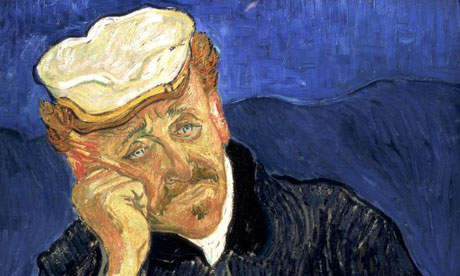
| Sometimes, you've got to be blue |
Some systems give purely mechanical detriments to make characters "insane." This is how the D&D 5e DMG does it on page 259-260. Congratulations, your character is now blind for 3 hours! However, the D&D system is built on powering up your character. This is epic fantasy. Some people like it when their characters suffer horrible mental trauma, and those people play Call of Cthulhu. So, my first problem with the way mental health conditions are included in the game is that it goes against the basic upwards flow of the system.
Additionally, the PHB and the DMG emphasize that people can play the game and role-play at whatever level they feel comfortable. Just want to hack some orcs? Good for you. Want to write a novella for your backstory? Go for it! But that leads us to another problem: in the DMG, the "indefinite madness" table manifests as a new flaw gained by your character. This means, if your character was just a simple hack-and-slasher, there's no consequence to the roll. This works against the idea that a player should be free to role-play at any level with a given mechanic.
However, I think both of these points are missing a bigger issue.
 |
| This art is by people who live with mental health conditions |
Many mental health conditions are actually the brain doing its best to adapt to unusual situations. Hearing a voice that isn't yours in your head is unusual. Talking to yourself in your own voice and convincing yourself not to listen is the brain's way of adapting.
I do want to note that some people's minds deal with trauma differently, and I think that's beyond the scope of this post. I can't claim that these ideas apply to people with chronic mental health conditions.
So, instead of taking the usual route of "here's how your character is worse now that you're insane", I wanted to give the players an ability they'd want to use: a power of the mind, with a drawback.
Essentially, the character experienced something traumatic, unusual, horrifying, or mind-bending. But that doesn't really change who they are. The brain just has to take the time to adapt back to an understanding of reality. So, each ability listed below has a drawback (how the brain is adapting) and a time limit (how long it takes to heal).
But if we just gave people a drawback and a time limit, that's no different than what the DMG does. we want the player to accept the ability, because the character's brain would want to heal. So every ability has a benefit as well.
As these are temporary benefits, they won't affect the game too much, and the drawbacks are small enough that a character can continue their upwards growth while they work through the problems. This is also useful from a session planning perspective: if you're in a dungeon and you expect to get through about 4-5 hours of in-game time, what about the character who just rolled a long-term madness and is unconscious for 7 hours?
 |
| There's some common themes throughout them |
Mental Reactions to Trauma
Circumspect:
- For the duration, you can never have disadvantage on an Intelligence-based ability check
- You cannot regain HP on a rest unless you spend at least an hour of the time away from your allies, talking through the events that lead to you gaining this ability. This becomes the only action you can take during a short rest if your are using hit dice to regain HP
- Ends after 30 days
Daydreamer:
- Once per day, you may automatically pass an Intelligence-based skill check
- Ends when you have used the ability 30 times
- For DM: roll 1d10 when the player uses this ability and modify the information they receive accordingly
- 1-4: false information, that the PC would have no way of knowing
- 5-7: false information
- 8-9: truthful information, that the PC would have no way of knowing
- 10: truthful information
Destructive:
- While not in combat, you regain 1 HP whenever you permanently and intentionally destroy an object that is small or larger
- Whenever you regain HP with this ability, all non-hostile creatures within 30 feet (including other members of your party) must succeed on a Wisdom saving throw of 8 + your character level or be frightened for 1 minute. A creature can repeat this saving throw at the end of their turn to end the effect.
- Ends when you have healed 300HP from this ability
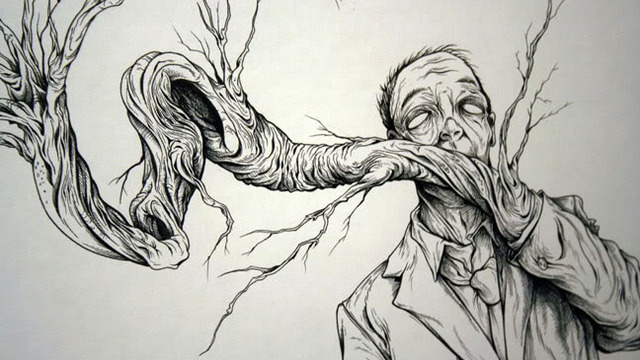 |
| Like the idea of the body rebelling against itself |
- Whenever you are targeted by an attack roll, roll 1d8+12. Treat the number rolled as your AC against that attack
- Ends when you have been hit by 30 attack rolls
Facade:
- For the duration, you have advantage on Charisma ability checks and saving throws made to influence hostile creatures or avoid effects from hostile creatures.
- For the duration, you have disadvantage on Charisma ability checks and saving throws made to influence indifferent or friendly creatures or avoid effects from indifferent or friendly creatures.
- Ends after you have made 10 Charisma saving throws with disadvantage
- For the duration, whenever you take damage, that damage is reduced by half. Any damage prevented this way must be tracked on your character sheet as Delayed Damage.
- At the end of a long rest, you may choose to take all your Delayed Damage as hit point damage. This damage cannot be reduced in any way. If you elect to not take your Delayed Damage, you must instead add an amount of damage to your Delayed Damage equal to your character level.
- If, at any point, your Delayed Damage reaches an amount equal to 10 x your character level, you take the damage immediately. The rules for instant death due to massive damage (PHB pg. 197) do not apply to this damage, and if you are reduced to 0 hit points in this way, you are unconscious but stable.
- Ends when you have taken 200 Delayed Damage.
Heartbroken:
- Choose a PC or NPC related to how you gained this ability.
- Whenever the PC/NPC is within your line of sight, you have disadvantage on all Intelligence, Wisdom, and Charisma ability checks and saving throws.
- Whenever the PC/NPC is out of sight, you have advantage on all Intelligence, Wisdom, and Charisma ability checks and saving throws.
- Ends when you have made 15 Wisdom saving throws with advantage (not necessarily due to this ability)
Hyper-Aware:
- Your passive perception score increases by 10
- Whenever you make an attack roll, whether ranged or melee, choose the target randomly among all available targets within the range of the attack
- Ends when you have made 50 attack rolls
Moody:
- Each day at dawn, roll 1d20:
- On an 11 or higher, you gain advantage on all rolls made for the next 24 hours
- On a 10 or lower, you have disadvantage on all rolls made for the next 24 hours
- Ends when advantage rolls equal disadvantage rolls, with a minimum of 3 days
 |
| Or trying to reason with different parts of your mind |
- At the beginning of combat, make a Wisdom Saving Throw of 15
- On a success, take 20 on initiative
- On a failure, you are surprised for the first round of combat
- Ends after 30 initiative rolls
Obsessive:
- For the duration, you can never have disadvantage on a wisdom-based ability check
- You cannot regain HP on a rest unless you spend at least an hour of the time in quiet, methodical contemplation. This becomes the only action you can take during a short rest if your are using hit dice to regain HP
- Ends after 30 days
Phobic:
- Choose a creature or creature type, preferably one related to how you gained this ability
- Whenever you kill a creature of that type, you may spend hit dice to regain HP as if you had finished a short rest
- You have vulnerability to all damage dealt by those creatures
- Ends when you reach 100 points by the following system:
- CR 2 or less: 1 point per kill of that creature type
- CR 3-8: 2 points per kill
- CR 9-13: 5 points per kill
- CR 14-17: 10 points per kill
- CR 18-23: 25 points per kill
- CR 24+: 50 points per kill
 |
| The people who made this art work hard, every day, to make sure they can fit in |
- Once per day, you may receive a clue about a future event related to a person, location, or item
- Ends when you have used the ability 30 times
- For DM: roll 1d10 when the player uses this ability and modify the information they receive accordingly
- 1-4: false clue, the event is against the party's goals
- 5-7: false clue, the event is beneficial to the party's goals
- 8-9: truthful clue, reveal an irrelevant future event about the target
- 10: truthful clue about a relevant future event
Rapport:
- As an action while you have this ability, you may touch an ally and heal them for an amount of HP no greater than your maximum HP - 1. When you do so, you take damage equal to the amount healed
- When an ally within 5 feet of you takes damage, make a Wisdom saving throw of 15
- On a failure, you take that amount of damage instead
- Ends when you have taken 150 damage due to failing the Wisdom saving throw of this ability
Repressed:
- During a short rest, you may permanently remove a skill, weapon, language, or tool proficiency in order to fully heal your HP.
- Ends when you have used the ability 5 times
 |
| Even when part of themselves is in revolt |
Restless:
- Choose a creature or creature type, preferably one related to how you gained this ability
- You have advantage on attack rolls made against those creatures
- If you fight a creature of that type, you cannot gain the benefits of a long rest for 24 hours. If you stop to rest for the night, you will only gain the benefits of a short rest
- Ends when you have missed 15 long rests due to this ability
Rude:
- You have advantage on intimidation and deception checks, but disadvantage on all other charisma checks and saving throws
- Ends when you have made 15 Charisma saving throws
Temperamental:
- When you make a Charisma-based Ability Check or Saving Throw, roll 1d6. On an even roll, treat your Charisma modifier as if it were that number. On an odd roll, treat your Charisma modifier as if it were that number, but negative. Your Proficiency bonus still applies normally to the roll if applicable.
- Ends when you have been forced to make 10 Charisma saving throws
Unease:
- Choose an environment or room type (e.g. arctic, swamp, close quarters, open field, etc), preferably one related to how you gained this ability
- Whenever you finish a combat in that environment and have at least 1 HP remaining, you may spend hit dice to regain HP as if you had finished a short rest
- You have vulnerability to all damage dealt to you in that environment
- Ends when you finish 30 combats in that environment, whether or not you gain the benefit from this ability
 |
| And people don't seem to understand |
Modifying these abilities to fit your game might be necessary. For a game focused on dungeon crawling, 30 days or 15 long rests might be quite a while, whereas a wilderness travel game might find them too short.
I think the sweet spot is to let the player feel the effects of the ability for just a little longer than they might like. Reinforce the idea that this is something they are doing subconsciously, that it ends when it ends, not when they want it to.
I'm looking forward to trying these out in my sessions. Some of them are pretty cool mechanically, and I think my players will really take them to heart. That definitely wouldn't be the case if I was just using the purely negative effects in the DMG.
Thanks for reading!
 |
| They can be heroes too! |


